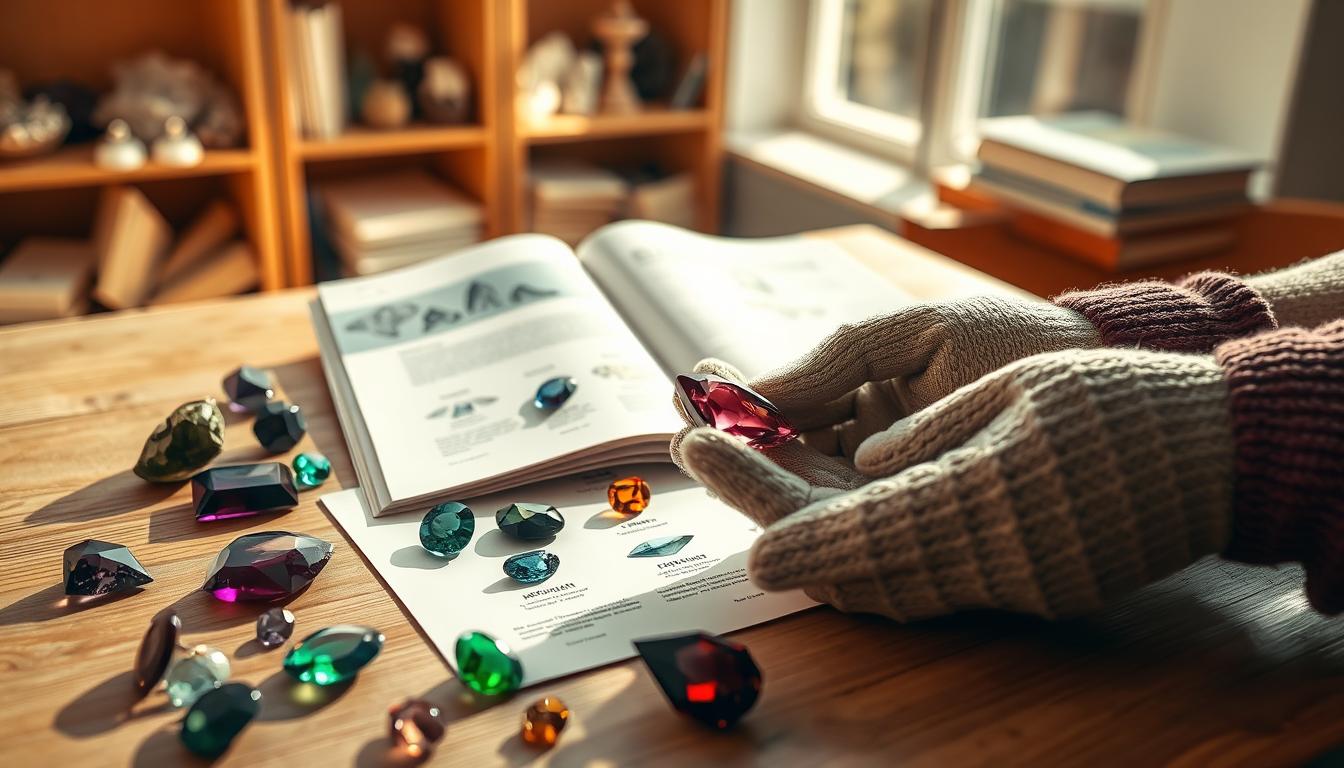
How To Identify Gemstones Without Special Tools might seem impossible at first, but experienced gem hunters know that your senses and basic observation skills can reveal surprising details about mystery stones. Whether you found a beautiful rock on a hiking trail or inherited some unknown gems, you can learn quite a bit without expensive equipment.
This practical approach relies on simple tests you can do at home using everyday items. While professional identification requires specialized tools, these methods will help you narrow down possibilities and spot obvious fakes.
TL;DR
- The scratch test using common materials can identify hardness levels from 2-9 on the Mohs scale.
- Real gemstones feel noticeably heavier than glass or plastic imitations of the same size.
- Temperature testing with your cheek reveals that genuine stones stay cool longer than synthetics.
- Simple visual checks for air bubbles, perfect clarity, and color consistency can spot obvious fakes within seconds.
How To Identify Gemstones Without Special Tools
Start with visual inspection under good lighting – natural sunlight works best for seeing true colors. Hold the stone up to light and look for internal characteristics that help separate real gems from imitations.
Check for these key visual clues that indicate authenticity:
- Inclusions – Natural gemstones often contain tiny internal flaws, crystals, or color variations
- Color depth – Genuine stones show subtle color shifts when rotated under light
- Surface imperfections – Real gems may have minor scratches or pits from natural formation
- Weight distribution – Authentic stones feel solid and dense in your palm
Basic Physical Tests You Can Do At Home
The scratch test remains one of the most reliable methods for identifying gemstones without equipment. Use common household items to determine hardness levels on the Mohs scale.
Here’s how to perform simple hardness tests:
- Fingernail test (2.5 hardness). If your nail scratches the stone easily, it’s likely talc, gypsum, or another soft mineral.
- Copper penny test (3.5 hardness). A penny that scratches the stone indicates calcite, fluorite, or similar soft gems.
- Steel knife test (5.5 hardness). Knife scratches suggest apatite, obsidian, or softer stones below quartz level.
- Glass test (5.5 hardness). If the stone scratches glass, it’s likely quartz, feldspar, or harder minerals.
Weight and Density Checks
Genuine gemstones feel significantly heavier than glass or plastic fakes of similar size. Hold the suspected gemstone in one hand and a piece of glass the same size in the other hand.
Real stones also conduct heat differently than synthetics. Place the stone against your cheek – authentic gems stay cool longer and feel denser against your skin.
Color and Clarity Assessment
Natural gemstones rarely show perfect clarity or completely uniform color distribution. Understanding gemstone grading helps you look for subtle variations that indicate natural formation rather than laboratory creation.
Watch for these red flags that suggest synthetic or fake stones:
- Air bubbles – Round bubbles inside indicate glass rather than natural crystal
- Perfect clarity – Flawless transparency often means synthetic creation
- Too-bright colors – Overly vivid hues may indicate dyed or treated stones
- Uniform patterns – Natural stones show irregular internal structures
Simple Light Tests
Use a flashlight or smartphone light to examine how the stone handles illumination. Natural gemstones interact with light in specific ways based on their crystal structure.
Real gems typically show light refraction – the bending of light rays as they pass through the stone. Glass and plastic fakes often lack this optical property or display it inconsistently.
Quick Authenticity Check
Drop a small amount of water on the stone’s surface. Real gemstones often cause water droplets to bead up due to their crystalline structure, while glass surfaces may spread the water more evenly.
Common Gemstone Identification Clues
Different gemstone families show distinct characteristics you can spot without special equipment. Learning these patterns helps narrow down your mystery stone’s identity.
Look for these specific traits in popular gemstones:
- Quartz varieties – Hardness of 7, often show hexagonal crystal faces, come in many colors
- Garnet family – Deep red to brown colors, hardness around 6.5-7.5, often dodecahedral shape
- Feldspar group – Hardness of 6, pearly luster, often show twinning lines or cleavage planes
- Calcite forms – Hardness of 3, fizzes with vinegar, shows double refraction when clear
Shape and Crystal Habits
Natural gemstones form in predictable crystal systems that create recognizable shapes. Even broken or tumbled stones often retain hints of their original crystal structure.
Common crystal shapes include hexagonal prisms (quartz), cubic forms (pyrite, fluorite), and octahedral shapes (diamond, spinel). These geometric clues help identify stone families even without perfect specimens.
Testing Stone Reactions
Some gemstones react to simple household substances in ways that help confirm their identity. These tests work best on small, inconspicuous areas of the stone.
Safe reaction tests include:
- Vinegar test. Calcite and other carbonate minerals fizz when exposed to weak acid like white vinegar.
- Magnet test. Hold a strong magnet near the stone – hematite and magnetite show magnetic attraction.
- Streak test. Rub the stone on unglazed ceramic to see the powder color it leaves behind.
- UV light check. Some stones like fluorite glow under blacklight from smartphones or UV flashlights.
Frequently Asked Questions
Can I damage my gemstone by testing it at home?
Hardness tests may leave small scratches on softer stones, so always test on hidden areas first. Most testing methods are non-destructive when done carefully.
How accurate is gemstone identification without professional tools?
Home methods can narrow down possibilities and spot obvious fakes, but definitive identification often requires professional equipment. You can typically determine gemstone families and eliminate synthetic options.
What’s the most reliable test I can do without special equipment?
The combination of hardness testing and weight assessment provides the most reliable results. These physical properties are difficult to fake and give strong clues about stone identity.
Should I clean my gemstone before trying to identify it?
Yes, gentle cleaning with warm soapy water helps you see the stone’s true color and surface characteristics. Avoid harsh chemicals that might damage softer stones.
Final Thoughts
How To Identify Gemstones Without Special Tools gives you practical skills for evaluating mystery stones using simple observation and testing methods. These techniques help separate genuine gems from fakes and narrow down identification possibilities significantly.
Start with visual inspection and basic hardness tests, then move to more specific identification methods as you gain experience. For beginners looking to build their knowledge, learning proper collection techniques and understanding proper storage methods will help protect your finds once identified. Remember that professional appraisal remains the only way to confirm valuable gemstone identity with certainty.