How To Tell If A Gemstone Is Real Or Fake becomes essential knowledge when you’re investing in precious stones or inherited jewelry. Fake gemstones flood the market, and even experienced buyers can get fooled by sophisticated synthetic alternatives.
Learning to spot authentic gems protects your money and ensures you’re getting genuine value. With the right techniques, you can identify most fake stones using simple tools and observation methods that complement basic gemstone identification techniques.
TL;DR
- Real gemstones feel cold to touch for 10-15 seconds, while glass fakes warm up immediately.
- Genuine stones show natural inclusions under 10x magnification, while synthetics appear too perfect.
- The scratch test using a steel file works for stones above 6.5 on the Mohs scale.
- Professional gemological testing costs $50-200 but provides 100% certainty for valuable stones.
How To Tell If A Gemstone Is Real Or Fake
Start with the temperature test – the most reliable quick check you can do anywhere. Hold the gemstone against your cheek or the back of your hand for several seconds.
Real gemstones conduct heat differently than glass or plastic imitations. Natural stones feel noticeably cold and stay cool longer, while fake materials warm up to match your skin temperature almost instantly.
Visual Inspection Methods
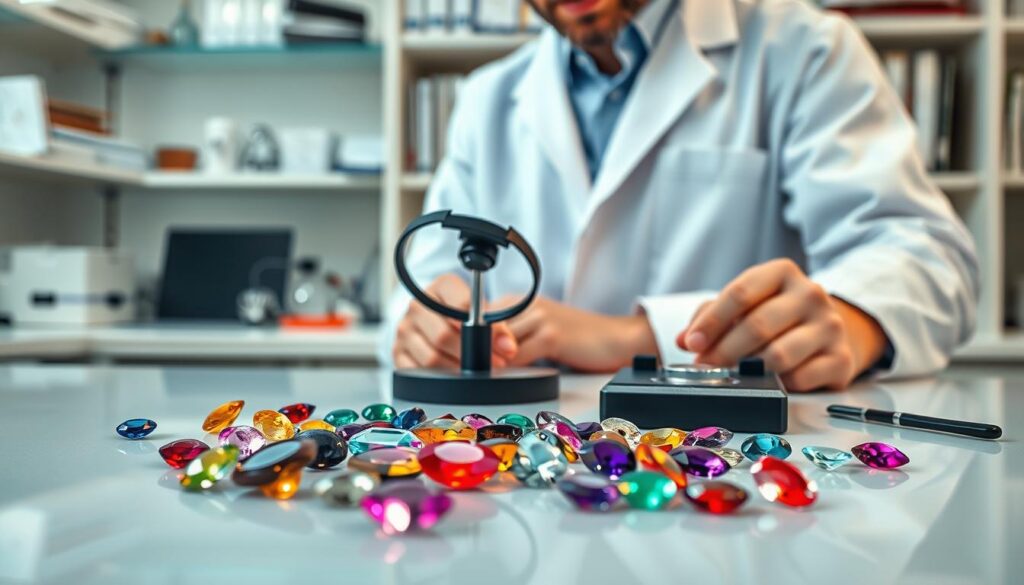
Examine the stone under bright light using a magnifying glass or jeweler’s loupe. Real gemstones contain natural inclusions – tiny imperfections that formed during their creation over millions of years.
Look for these authentic characteristics:
- Natural inclusions – Small bubbles, crystals, or color variations inside the stone
- Uneven color distribution – Slight variations that show natural formation
- Surface imperfections – Tiny scratches or pits from natural wear
- Weight differences – Real gems feel heavier than glass or plastic fakes of the same size
Physical Testing Techniques
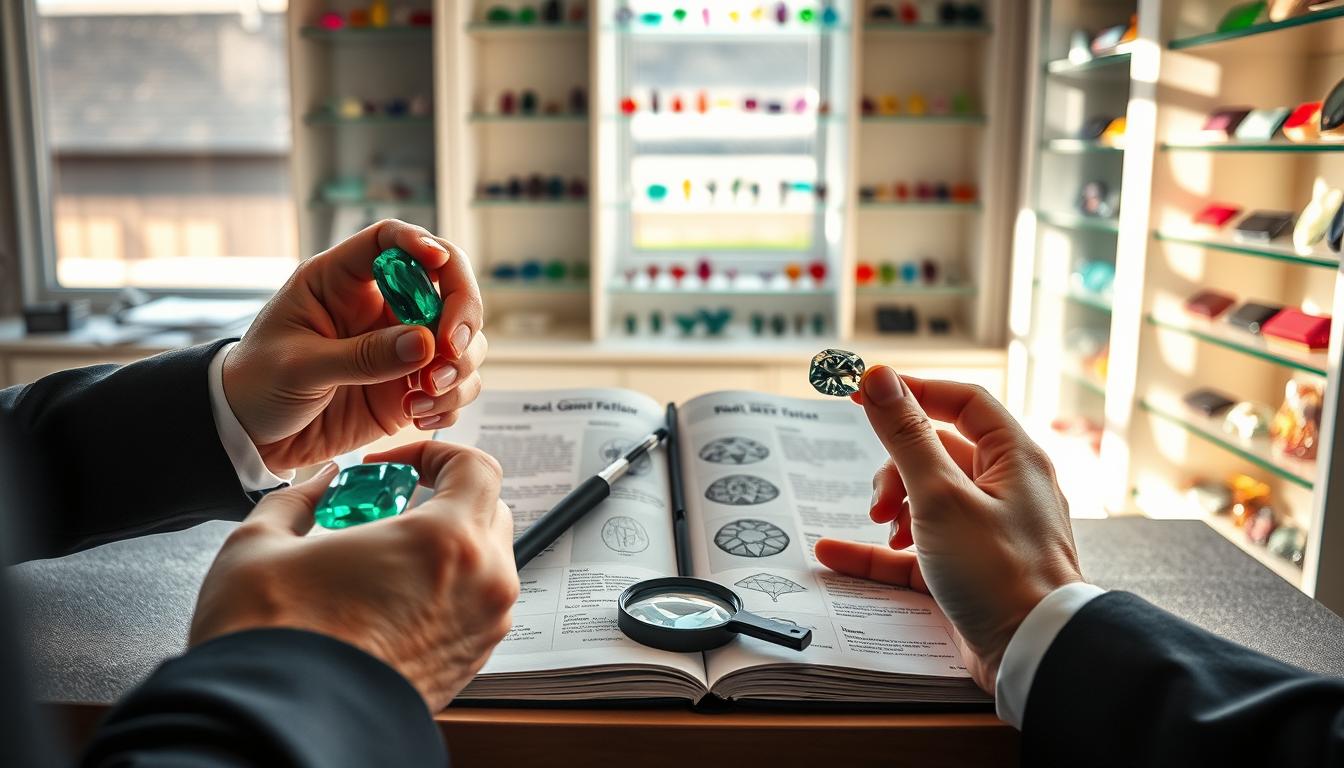
The hardness test reveals a stone’s true identity by measuring its resistance to scratching. Use the Mohs hardness scale as your guide – each gemstone has a specific hardness rating.
Try these safe testing methods:
- Steel file test. File steel rates 5.5 on the Mohs scale, so it will scratch softer materials but not genuine hard gems like sapphires (9) or diamonds (10).
- Glass scratch test. Real gemstones above 5.5 hardness will scratch glass, while softer fakes won’t leave a mark.
- Coin test. A copper penny (3.5 hardness) will scratch very soft materials but won’t affect real gems.
Advanced Identification Methods
Professional-grade testing provides definitive answers for valuable stones. Gemological tools measure specific properties that fakes can’t replicate.
These advanced tests include:
- Refractive index testing – Measures how light bends through the stone
- Spectroscopy analysis – Identifies chemical composition using light wavelengths
- Specific gravity testing – Compares the stone’s density to water
- Thermal conductivity – Tests how the stone conducts heat
Test Multiple Areas
Always test different spots on the same stone. Some fakes use real gem dust coatings over glass cores, so one area might test real while others don’t.
Common Fake Gemstone Types
Understanding popular fake materials helps you spot them faster. Manufacturers use several methods to create convincing imitations that fool casual observers, which is why it’s crucial to avoid common mistakes in gemstone collecting.
Glass Imitations
Glass fakes represent the most common type of gemstone fraud. They’re cheap to produce and can mimic many gem colors convincingly.
Glass fakes show these telltale signs:
- Air bubbles – Tiny round bubbles visible under magnification
- Swirl marks – Flow lines from the manufacturing process
- Soft edges – Facet edges appear rounded rather than sharp
- Temperature sensitivity – Warm up quickly when touched
Synthetic Gemstones
Lab-created gems have identical chemical properties to natural stones but form in controlled environments. They’re not technically fake, but they’re worth much less than natural gems.
Synthetic stones often appear too perfect with flawless clarity and even color distribution throughout. Natural gems show slight imperfections that prove their authentic formation, which is why understanding how gemstone quality is graded helps distinguish between natural inclusions and artificial perfection.
Professional Authentication
For expensive purchases or insurance purposes, professional gemological testing provides absolute certainty. Certified gemologists use specialized equipment unavailable to home testers.
Professional services include:
- Gemological certification – Official documents verifying authenticity and quality
- X-ray analysis – Reveals internal crystal structure
- Chemical testing – Confirms exact mineral composition
- Origin determination – Identifies where the gem formed naturally
Frequently Asked Questions
Can fake gemstones pass basic tests?
High-quality synthetics can pass simple tests, but they’ll fail under professional gemological analysis. Multiple testing methods provide better accuracy than relying on just one.
How much does professional gem testing cost?
Basic authentication ranges from $50-100, while full gemological reports with certification cost $150-300. The investment protects you when buying expensive stones.
Are lab-created gems considered fake?
Lab gems have identical properties to natural stones but form artificially. They’re real gems chemically but worth significantly less than natural equivalents.
What’s the most reliable home test?
The temperature test combined with magnified inspection catches most fakes. Real gems stay cold longer and show natural inclusions under 10x magnification.
Final Thoughts
How To Tell If A Gemstone Is Real Or Fake requires combining multiple testing methods for accurate results. Start with simple temperature and visual tests, then move to hardness testing for stones you suspect might be valuable.
When in doubt, professional authentication protects your investment and gives you peace of mind. The small cost of testing prevents much larger losses from buying expensive fakes, especially if you’re just starting your gemstone collecting journey.