How To Store Rocks And Crystals Without Damage requires careful attention to prevent scratches, chips, and mineral deterioration. Whether you’re a seasoned collector or just starting your journey with geological specimens, proper storage protects your investment and preserves the natural beauty of each piece.
The right storage approach depends on your collection size, crystal types, and available space. Some minerals are more fragile than others, and certain combinations can cause damage when stored together.
TL;DR
- Wrap each specimen individually in soft cloth or tissue paper to prevent contact damage.
- Store crystals at room temperature (65-75°F) with 45-55% humidity to prevent cracking.
- Keep different mineral types separated since harder stones can scratch softer ones.
- Use padded compartment boxes or egg crate foam for organized, cushioned storage.
How To Store Rocks And Crystals Without Damage
The foundation of crystal storage starts with individual wrapping. Each specimen needs its own protective barrier to prevent contact with other stones, which can cause chips, scratches, or fractures.
Soft materials work best for wrapping. Cotton cloth, tissue paper, or bubble wrap provide cushioning while allowing air circulation around your specimens. For beginners building their first collection, understanding proper rock collecting fundamentals helps establish good storage habits from the start.
Essential Wrapping Materials
- Cotton flannel – excellent for delicate specimens like selenite or calcite.
- Acid-free tissue paper – prevents chemical reactions with minerals over time.
- Small bubble wrap – ideal for larger, sturdier pieces that need extra protection.
- Foam padding – perfect for irregularly shaped specimens.
Container Options for Crystal Storage
Your storage container choice impacts long-term preservation. The best options provide cushioning, organization, and protection from environmental factors.
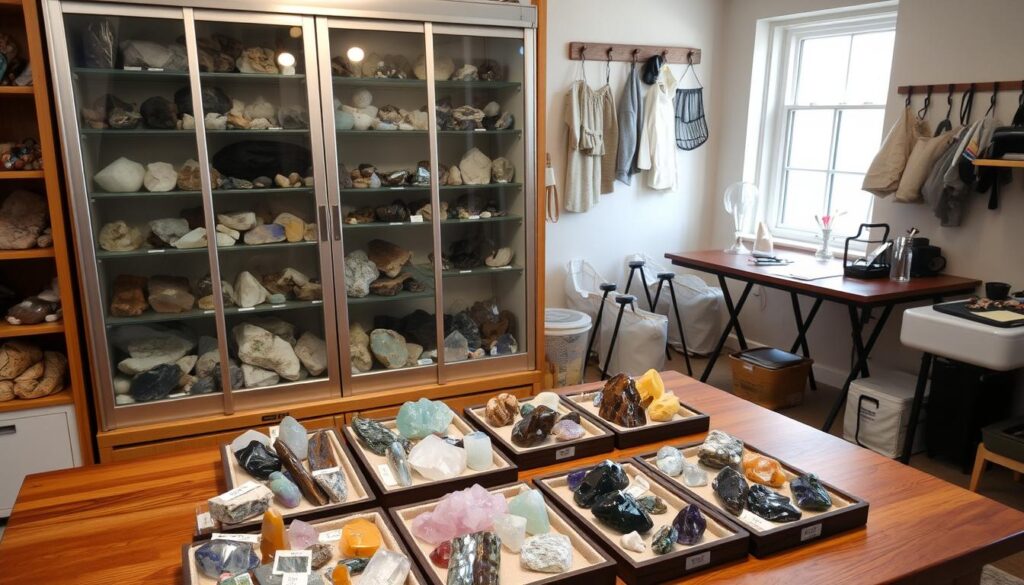
Compartmentalized storage prevents movement and collision between specimens. This approach works especially well for smaller collections or valuable pieces that need individual attention. When planning your storage system, consider display options that combine protection with showcase capability.
Recommended Storage Containers
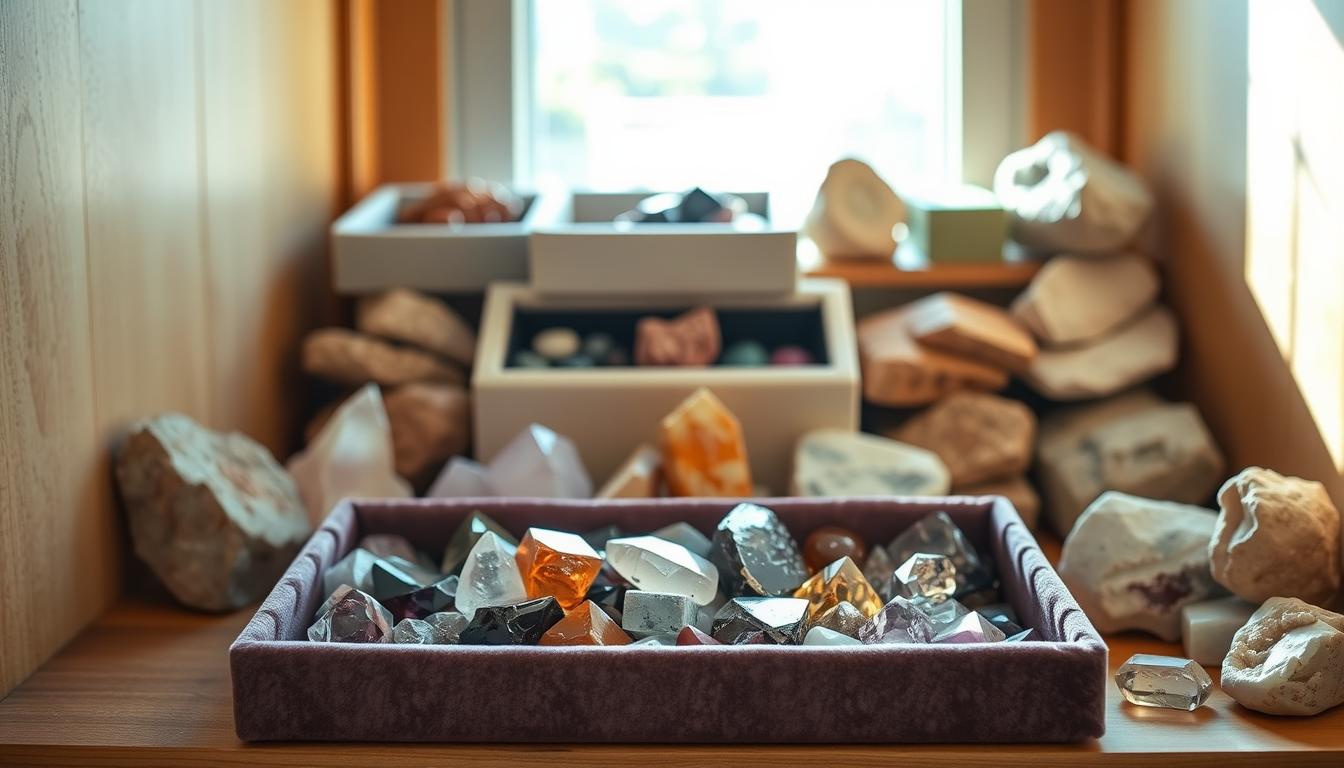
- Compartment boxes – adjustable dividers let you customize space for each specimen.
- Egg crate foam inserts – create custom-fitted spaces for odd-shaped crystals.
- Wooden display cases – combine storage with showcase capability for special pieces.
- Clear plastic organizers – allow easy identification without opening containers.
Environmental Factors That Damage Crystals
Temperature fluctuations cause expansion and contraction in minerals, leading to internal stress and eventual cracking. Maintaining stable conditions prevents this thermal damage.
Humidity control is equally important since some minerals absorb moisture and can deteriorate or change color. Others become brittle in overly dry conditions. Before storing your specimens, learn safe cleaning techniques to ensure they’re properly prepared for long-term preservation.
Optimal Storage Conditions
- Temperature control. Keep storage areas between 65-75°F with minimal daily variation.
- Humidity management. Maintain 45-55% relative humidity using silica gel packets or dehumidifiers.
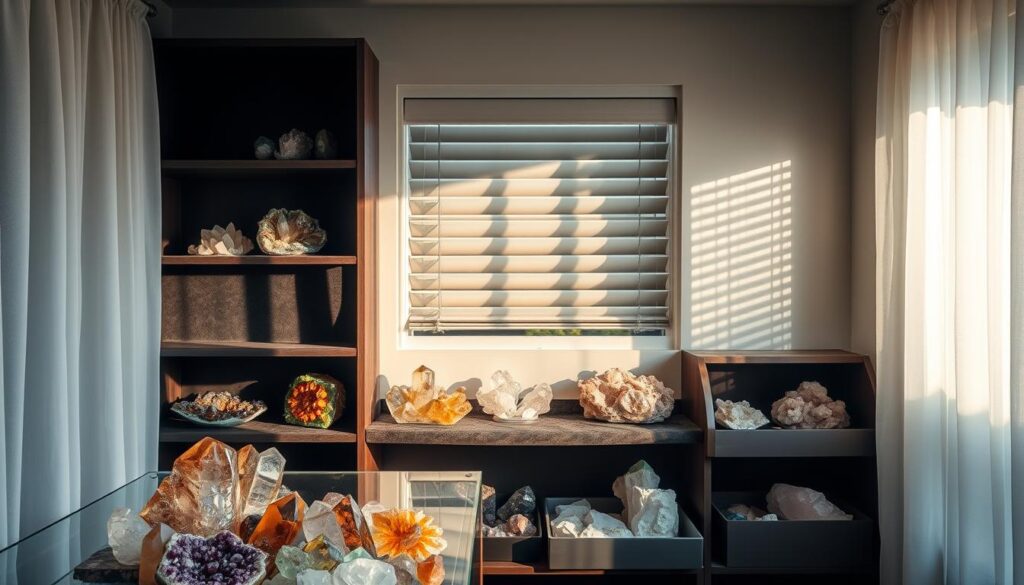
- Light protection. Store light-sensitive minerals like amethyst away from direct sunlight.
- Air circulation. Ensure adequate ventilation to prevent moisture buildup.
Quick Identification System
Label each wrapped specimen with waterproof tags including the mineral name, location found, and date acquired. This prevents unwrapping for identification and reduces handling damage.
Organizing by Mineral Hardness
The Mohs hardness scale determines which minerals can damage others through contact. Storing specimens by hardness groups prevents softer minerals from getting scratched by harder ones.
Separate your collection into hardness categories and store each group in different containers or sections. This system protects delicate specimens while making organization logical and scientific.
Common Mineral Hardness Groups
- Soft minerals (1-3) – talc, gypsum, calcite need extra padding and separation.
- Medium hardness (4-6) – fluorite, apatite, feldspar can be stored together safely.
- Hard minerals (7-10) – quartz, topaz, diamond should be isolated from softer specimens.
Special Considerations for Fragile Specimens
Some minerals require extra care due to their crystal structure or chemical composition. These specimens benefit from specialized storage approaches tailored to their specific vulnerabilities.
Water-soluble minerals like halite need moisture-proof containers, while fibrous minerals like asbestos varieties require sealed storage for safety reasons. Understanding what makes certain specimens valuable helps prioritize which pieces need the most careful storage attention.
High-Maintenance Minerals
- Selenite – store in dry conditions away from any moisture sources.
- Pyrite – needs low humidity to prevent oxidation and “pyrite disease.”
- Opal – requires stable humidity to prevent crazing and cracking.
- Amber – keep away from heat and chemicals that can cause deterioration.
Long-Term Preservation Strategies
Regular maintenance checks help catch problems before they become serious. Inspect your collection quarterly for signs of deterioration, pest activity, or environmental damage.
Rotation and gentle cleaning keep specimens in optimal condition. Handle each piece minimally but check for dust buildup, moisture damage, or structural changes over time. For valuable specimens, knowing how to assess their worth helps determine appropriate storage investments.
Frequently Asked Questions
Can I store different types of crystals together?
Only store crystals of similar hardness together to prevent scratching. Separate soft minerals like calcite from hard ones like quartz, and always wrap each specimen individually.
What’s the best way to clean crystals before storage?
Use a soft brush to remove dust and debris, then wipe with a slightly damp cloth if the mineral is water-safe. Let specimens dry completely before wrapping and storing.
How often should I check my stored crystal collection?
Inspect your collection every 3-4 months for signs of damage, moisture, or pest activity. This regular maintenance helps catch problems early before they cause permanent damage.
Is it safe to store crystals in plastic containers?
Yes, but use high-quality, acid-free plastic containers with adequate ventilation. Avoid cheap plastics that may off-gas chemicals that could react with certain minerals over time.
Should I store valuable crystals differently than common ones?
Valuable specimens deserve individual containers with extra padding and climate control. Consider safety deposit boxes or fireproof safes for extremely valuable pieces worth over $1,000.
Final Thoughts
How To Store Rocks And Crystals Without Damage becomes second nature once you establish proper systems and habits. The key is consistent application of protective wrapping, appropriate containers, and stable environmental conditions.
Start by organizing your current collection by hardness and wrapping each piece individually. Your future self will thank you for taking these preservation steps today.