Crystal Guide information helps new collectors understand the fascinating world of mineral specimens and their unique properties. Whether you’re drawn to the sparkle of quartz or the deep colors of amethyst, learning about crystals opens up a rewarding hobby that connects you with Earth’s natural processes.
This guide covers everything from basic crystal identification to building your first collection. You’ll discover which crystals are best for beginners, how to spot quality specimens, and where to find the most interesting varieties in nature.
TL;DR
- Quartz varieties make up 60% of all crystal finds and are perfect for new collectors due to their abundance and durability.
- The Mohs hardness scale from 1-10 helps identify crystals – most common specimens fall between 6-8 on this scale.
- Clear crystals with minimal fractures and good terminations sell for 3-5 times more than cloudy or damaged specimens.
- Basic field tools like a magnifying glass, hardness kit, and streak plate cost under $50 and identify 90% of crystal types.
Crystal Guide Fundamentals
Understanding crystal basics starts with learning how these minerals form deep within the Earth. Crystals grow when molten rock cools slowly, allowing atoms to arrange themselves in organized patterns that create the geometric shapes we recognize.
The most common crystal systems include cubic, hexagonal, and orthorhombic formations. Each system produces distinct shapes that help with identification – for example, quartz typically forms six-sided prisms while pyrite creates perfect cubes.
Essential Crystal Properties
Every crystal has specific properties that make identification possible. How to identify crystals in the field becomes easier when you understand these key characteristics:
- Hardness – measured on the Mohs scale from 1 (talc) to 10 (diamond).
- Luster – describes how light reflects off the surface (metallic, glassy, dull).
- Color – can vary within the same mineral due to impurities.
- Streak – the color left when scraped across unglazed ceramic.
- Crystal system – the geometric pattern of the crystal structure.
Types of Crystals for Collectors
New collectors should focus on common, durable crystals that are easy to find and identify. Quartz varieties top the list because they’re abundant, affordable, and come in many attractive forms.
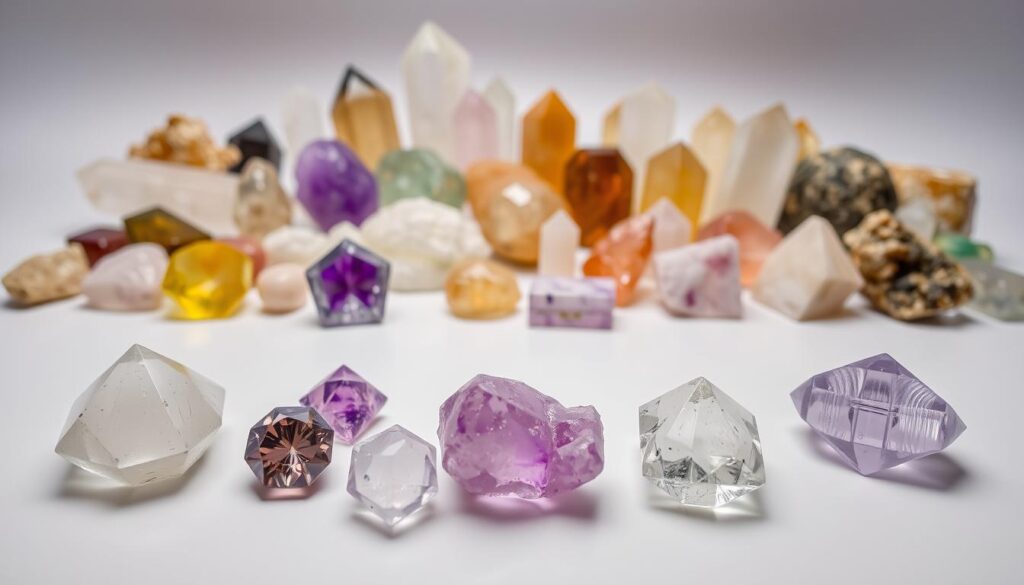
The best crystals for beginner collectors include clear quartz, amethyst, citrine, and smoky quartz. These specimens teach basic identification skills while building confidence in the field.
Quartz Family Crystals
Quartz represents the largest group of collectible crystals. This mineral family includes dozens of varieties, each with unique colors and patterns:
- Clear quartz – colorless and transparent, often called “rock crystal”.
- Amethyst – purple variety caused by iron and aluminum impurities.
- Citrine – yellow to golden brown, rare in nature.
- Rose quartz – pink color from titanium, iron, or manganese traces.
- Smoky quartz – gray to black from natural radiation exposure.
Other Popular Crystal Types
Beyond quartz, several other crystal families offer excellent collecting opportunities. Feldspar minerals like moonstone and labradorite show beautiful optical effects, while calcite crystals demonstrate perfect rhombohedral shapes.
Pyrite crystals attract collectors with their metallic gold luster and cubic forms. Fluorite specimens display vibrant colors and octahedral shapes that make striking display pieces.
Crystal Quality and Value
Understanding crystal quality helps collectors make smart purchasing decisions and recognize valuable finds. Clear vs cloudy crystals for collectors shows how transparency affects both beauty and market value.
High-quality crystals share several characteristics that increase their desirability and worth. Perfect terminations, minimal inclusions, and natural faces command premium prices from collectors and dealers.
Factors That Determine Crystal Quality
Professional collectors evaluate crystals using specific criteria that determine market value:
- Clarity. Transparent crystals with few internal flaws rate highest in most species.
- Termination. Natural crystal points should be complete and undamaged.
- Luster. Surfaces should show bright, even reflection of light.
- Size. Larger specimens are rarer and more valuable, all else being equal.
- Color. Intense, even coloration increases appeal and price.
Collector’s Tip
Always examine crystals under bright light before buying. Natural sunlight reveals flaws and color variations that indoor lighting might hide.
Finding Crystals in Nature
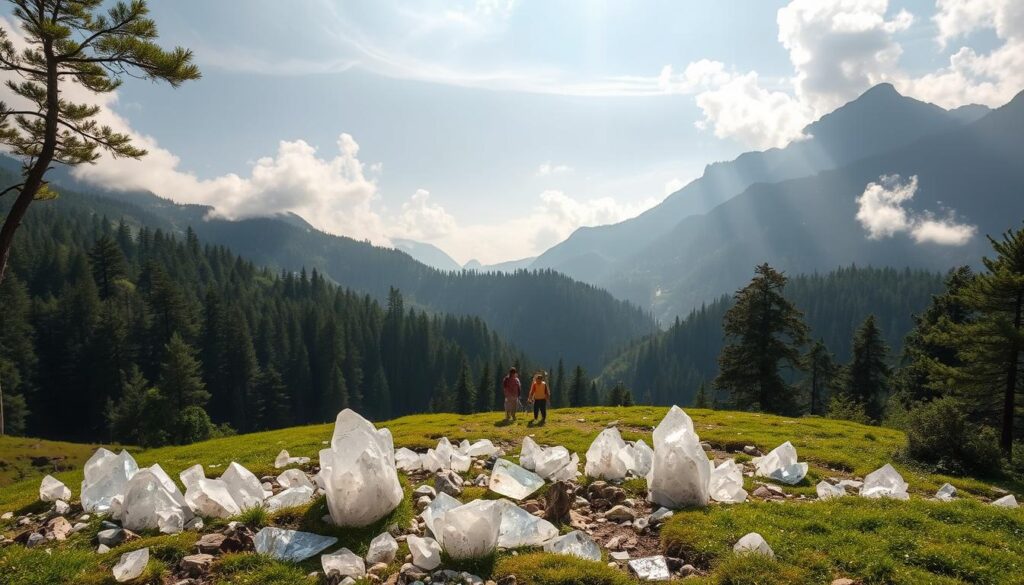
Successful crystal hunting requires understanding where these minerals form naturally. Geology clues that point to hidden gems helps collectors read landscape features that indicate promising locations.
Most crystals form in specific geological environments. Pegmatites produce large, well-formed specimens, while hydrothermal veins create smaller but often more perfect crystals.
Best Crystal Hunting Locations
Different states offer unique crystal collecting opportunities based on their geological history:
- Arkansas – famous for quartz crystals in the Ouachita Mountains.
- North Carolina – emerald, ruby, and sapphire in the western counties.
- Montana – sapphire deposits along the Missouri River.
- Colorado – amazonite and smoky quartz in the Pike’s Peak region.
- California – tourmaline and kunzite in San Diego County.
Crystal Identification Tools
Basic identification tools help collectors distinguish between similar-looking crystals. Essential tools every mineral collector should own includes affordable options that handle most identification tasks.
A simple hardness testing kit, magnifying glass, and streak plate solve most crystal mysteries in the field. These tools cost less than a single quality specimen but provide years of reliable service.
Field Testing Methods
Simple tests reveal crystal identity without expensive equipment:
- Scratch test – determines hardness using known materials.
- Streak test – reveals true color when scratched on ceramic.
- Luster observation – describes how light reflects from surfaces.
- Crystal shape – identifies the geometric system.
- Specific gravity – estimated by feel and compared to known specimens.
Building Your Crystal Collection
Starting a crystal collection requires planning and patience to build a meaningful display. Focus on quality over quantity, especially in the beginning when budget constraints limit purchases.
Many successful collectors specialize in particular crystal types or geographic regions. This approach develops deeper knowledge while creating collections with educational and aesthetic value.
Collection Organization Strategies
Organized collections provide more satisfaction and learning opportunities than random accumulations:
- Choose a theme. Focus on one crystal family, locality, or color range.
- Research before buying. Learn about specimens before adding them to your collection.
- Document everything. Record location, date found, and relevant geological information.
- Display properly. How to display crystal collections safely protects specimens while showcasing their beauty.
- Network with others. Join local clubs to trade specimens and share knowledge.
Crystal Care and Maintenance
Proper care preserves crystal specimens for future generations of collectors. Different minerals require specific cleaning methods that remove dirt without causing damage.
Understanding crystal hardness and chemical sensitivity prevents expensive mistakes during cleaning. Some crystals dissolve in water while others crack from sudden temperature changes.
Safe Cleaning Techniques
Each crystal type needs appropriate cleaning methods based on its physical and chemical properties:
- Quartz varieties – soap and water with soft brushes work well.
- Calcite crystals – avoid acids which dissolve calcium carbonate.
- Pyrite specimens – keep dry to prevent oxidation and sulfur smell.
- Gypsum crystals – extremely soft, clean only with dry brushes.
- Salt minerals – never use water, which dissolves these specimens.
Frequently Asked Questions
What crystals should beginners start collecting?
Begin with quartz varieties like clear quartz, amethyst, and citrine because they’re common, affordable, and durable. These crystals teach basic identification skills while building confidence.
How can I tell if a crystal is real or fake?
Real crystals have natural imperfections, consistent hardness, and appropriate weight for their size. Fake crystals often feel too light, show air bubbles, or have perfect clarity that’s suspicious in nature.
Where is the best place to find crystals?
Public collecting areas, rock shops, and mineral shows offer the best opportunities for beginners. Always obtain permission before collecting on private property and check local regulations.
How should I clean my crystal specimens?
Use gentle methods appropriate for each crystal type – soap and water for quartz, dry brushing for soft minerals like gypsum. Always research cleaning methods before attempting to clean valuable specimens.
What tools do I need to identify crystals?
Basic identification requires a magnifying glass, hardness testing kit, streak plate, and reference guide. These tools cost under $50 and handle most identification needs.
Final Thoughts
Crystal Guide knowledge transforms casual interest into serious collecting expertise that lasts a lifetime. Start with common specimens to build identification skills, then expand into specialized areas that match your interests and budget.
Remember that the best collections grow slowly through careful selection and continuous learning. Focus on quality specimens that teach something new about Earth’s geological processes.