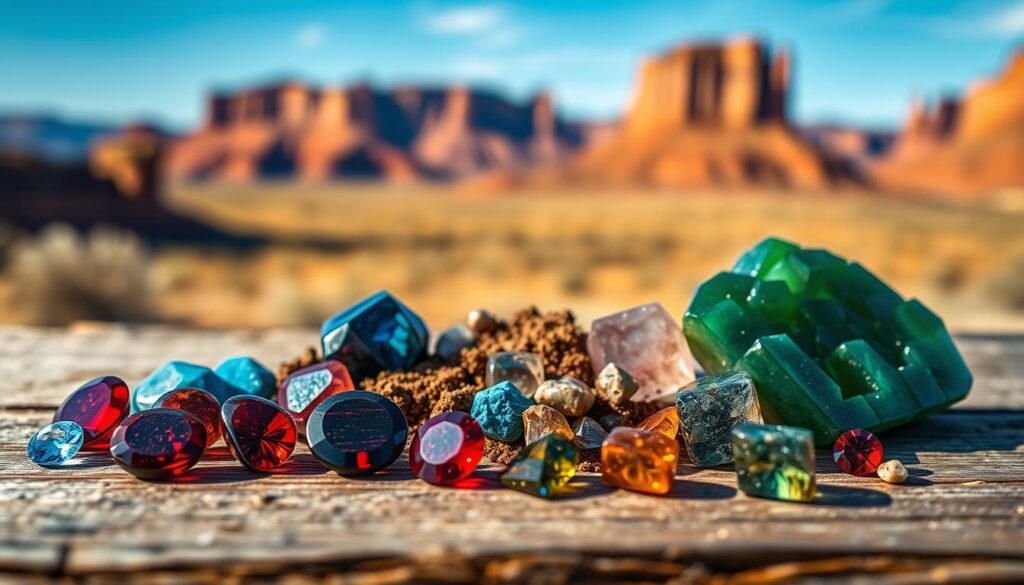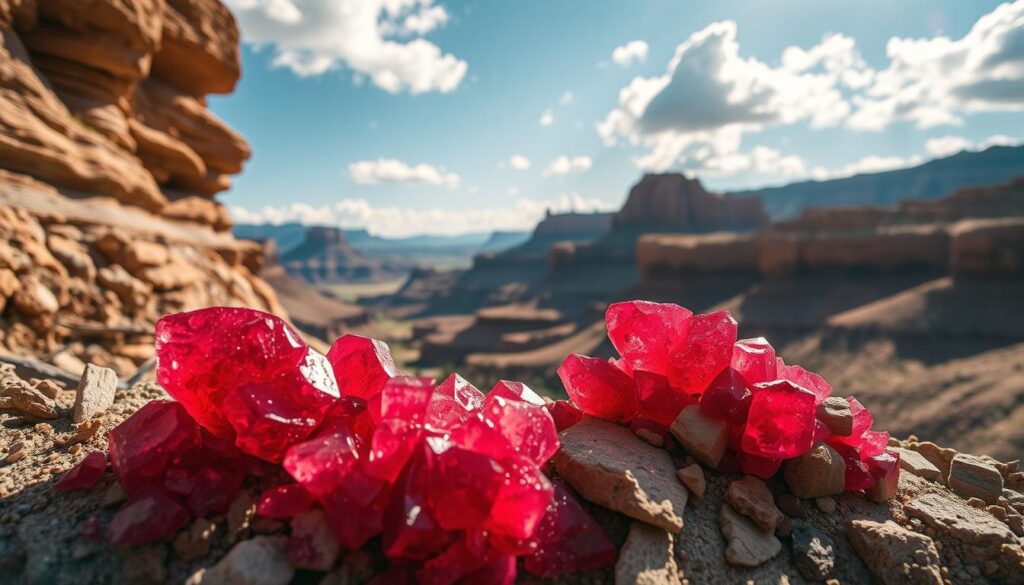
Utah Gemstones offer incredible opportunities for rockhounds and collectors across the state’s diverse geological landscape. The unique formations created by millions of years of tectonic activity have produced some of the world’s most sought-after minerals. From the famous topaz deposits to the ultra-rare red beryl, Utah’s treasures attract gem enthusiasts from around the globe.
The state’s varied terrain includes everything from volcanic rhyolite formations to ancient sedimentary layers. Each geological region offers different types of minerals and gemstones waiting to be discovered.
TL;DR
- Topaz Mountain produces over 90% of the world’s orange topaz specimens found in volcanic rhyolite.
- Red beryl from the Wah Wah Mountains sells for $1,000+ per carat due to its extreme rarity.
- Utah has 15+ accessible public collecting sites including fee dig locations and free hunting areas.
- Spring and fall offer the best collecting conditions with temperatures between 60-80°F and clear ground visibility.
Utah Gemstones Discovery Guide
Utah’s geological diversity stems from ancient volcanic activity and ongoing tectonic processes. The state sits at the intersection of multiple geological provinces, creating perfect conditions for gemstone formation.
The Basin and Range region produces most of Utah’s famous specimens. Volcanic eruptions deposited mineral-rich layers that cooled slowly, allowing crystals to form in cavities and veins.
Topaz – The State’s Official Gemstone
Utah designated topaz as its official state gemstone in 1969. The Thomas Range produces stunning orange, pink, and sherry-colored specimens that rival any found worldwide.
- Topaz Mountain – Primary collecting site with public access and camping facilities.
- Spor Mountain – Secondary location with smaller but high-quality crystals.
- Dugway Geode Beds – Features topaz-lined geodes and nodules.
Red Beryl – World’s Rarest Gemstone
Red beryl occurs only in Utah’s Wah Wah Mountains and a few locations in New Mexico. The specific volcanic conditions required for its formation make it 1,000 times rarer than diamonds.
Commercial mining operations extract most specimens, but rockhounds occasionally find small crystals in the public areas. The rare gemstones market values quality red beryl higher than most precious stones.
Prime Collecting Locations
Utah offers dozens of productive gemstone sites across different regions. Each area has unique geological features that produce specific types of minerals.
Northern Utah Sites
The Uinta Mountains provide excellent opportunities for finding garnet, topaz, and various quartz specimens. The area’s granite formations contain numerous mineral-bearing pegmatites.
- Moon Lake Area. Drive forest service roads to find garnet schist outcrops and quartz veins.
- Mirror Lake Highway. Stop at roadcuts to examine granite formations for embedded crystals.
- Flaming Gorge Region. Search quartzite formations for agate and jasper specimens.
Central Utah Destinations
The Thomas Range remains Utah’s most famous collecting destination. Multiple sites within this area produce different types of specimens.
- Topaz Mountain – Fee dig site with guaranteed topaz finds and camping.
- U-Dig Fossils – Commercial site offering trilobite and gemstone collecting.
- Simpson Mountains – Free collecting area for variscite and turquoise.
Southern Utah Treasures
The Colorado Plateau’s sedimentary rocks host agate, jasper, and petrified wood deposits. Many sites offer easy access from paved roads.
Dixie National Forest contains several productive areas for agate hunting along creek beds and exposed formations. The Hurricane Cliffs area produces colorful jasper specimens in red, yellow, and brown varieties.
Best Collecting Strategy
Visit sites after winter storms when freeze-thaw cycles expose fresh specimens. Bring a UV light to identify fluorescent minerals that are invisible in daylight.
Essential Equipment and Techniques
Successful gem hunting requires proper tools and knowledge of identification techniques. Utah’s varied terrain demands different approaches depending on the target minerals, similar to techniques used for Colorado gemstone hunting.
Must-Have Tools
Basic equipment includes a geological pick, small shovel, and collection containers. More specialized tools help identify and extract delicate specimens safely.
- Rock hammer – 16-20 oz weight for breaking hard formations.
- Hand lens – 10x magnification for detailed crystal examination.
- UV light – Reveals fluorescent minerals like calcite and willemite.
- Field guide – Utah-specific mineral identification reference.
Identification Methods
Learning basic mineral properties helps distinguish valuable specimens from common rocks. Color, hardness, and crystal structure provide key identification clues.
Many Utah minerals show distinctive features under UV light. Calcite fluoresces orange-red, while some topaz specimens glow yellow or blue.
Legal Considerations
Public lands allow limited collecting for personal use, typically up to 25 pounds per day. Private property requires permission, and some areas are completely off-limits.
National parks prohibit all collecting, while national forests generally allow it with restrictions. Always check current regulations before visiting any site, as rules change frequently.
Seasonal Collecting Opportunities
Utah’s high desert climate creates distinct collecting seasons with different advantages. Weather patterns affect both site accessibility and specimen visibility.
Spring Collecting (March-May)
Melting snow exposes fresh specimens while temperatures remain comfortable for outdoor work. Rain washes dirt from crystals, making them easier to spot.
Summer Considerations (June-August)
High temperatures make collecting challenging, but early morning and evening hours work well. Some high-elevation sites become accessible only after snow melts.
Fall Prime Time (September-November)
Ideal conditions combine comfortable temperatures with excellent visibility. This season offers the best overall collecting opportunities across most Utah locations.
Commercial Mining and Public Access
Several commercial operations offer fee-digging opportunities where visitors can keep their finds. These sites provide guaranteed success for families and beginners.
The Topaz Mountain fee dig allows unlimited collecting for a daily rate. Professional guides help visitors identify valuable specimens and provide collecting tips.
Some mining companies offer guided tours of active operations during slower periods. These experiences provide insight into large-scale mineral extraction methods.
Frequently Asked Questions
What gemstones are most common in Utah?
Topaz, garnet, and quartz varieties are the most frequently found gemstones. Agate, jasper, and variscite also occur in multiple locations throughout the state.
Do I need permits for collecting gemstones in Utah?
Most public land allows personal collecting without permits up to 25 pounds per day. Some areas require special permits or charge fees for access.
When is the best time to hunt for gems in Utah?
Spring and fall offer ideal conditions with moderate temperatures and good specimen visibility. Avoid summer heat and winter snow at high elevations.
Can I find valuable gemstones as a beginner?
Yes, Utah’s abundant deposits make it possible for beginners to find quality specimens. Fee dig sites guarantee finds while teaching proper techniques.
What equipment do I need for gemstone hunting?
Basic tools include a rock hammer, collection bags, and a hand lens for identification. UV lights help find fluorescent specimens invisible to the naked eye.
Final Thoughts
Utah Gemstones represent some of the most diverse and accessible collecting opportunities in North America. The state’s unique geology continues producing new specimens as erosion exposes fresh deposits.
Start with established sites like Topaz Mountain to gain experience, then explore the many lesser-known locations throughout the state. Consider visiting neighboring states like Arizona for turquoise and peridot, or Montana for sapphires to expand your collecting experience.