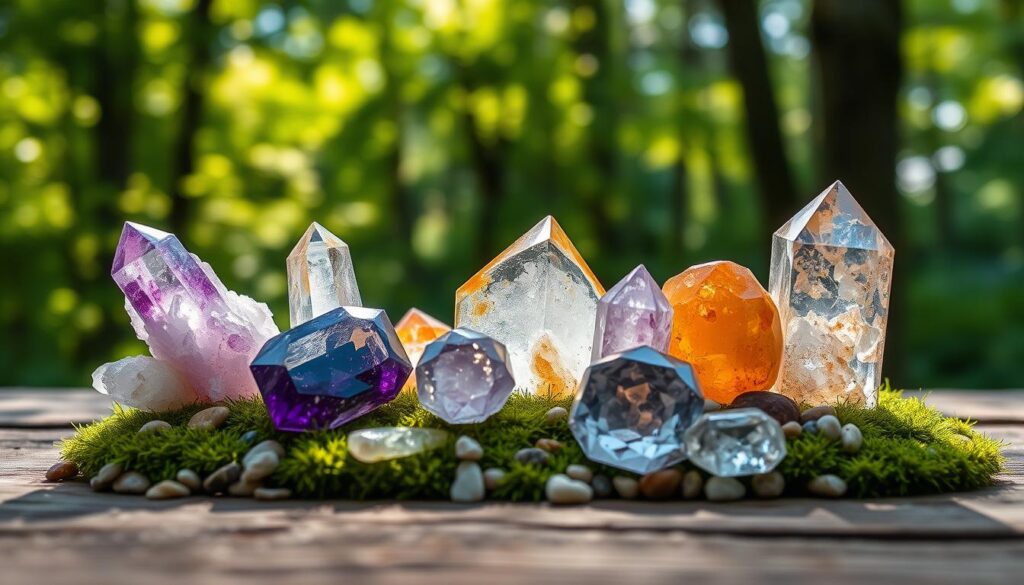
Common Gemstones Found In Vermont offer rock hounds and mineral collectors a fascinating glimpse into the state’s rich geological history. Vermont’s diverse bedrock, shaped by ancient mountain-building processes and glacial activity, has created ideal conditions for various gemstone formations throughout the Green Mountain State.
From the famous Vermont garnet to lesser-known treasures like actinolite and epidote, the state’s quarries, stream beds, and mountainous regions yield an impressive variety of collectible minerals. Whether you’re a seasoned rockhound or just beginning your gemstone hunting journey, Vermont’s geological treasures provide endless opportunities for discovery.
TL;DR
- Vermont garnet is the official state gem, found primarily in almandine variety with deep red colors in 23 different locations statewide.
- Quartz varieties including smoky quartz and clear crystals are abundant in the Chester Dome area and can reach sizes up to 6 inches long.
- Actinolite crystals form distinctive green needle-like formations and are commonly found in the Waterbury and Eden Mills regions.
- Staurolite produces natural cross-shaped crystals up to 2 inches across, making it one of Vermont’s most unique collectible minerals.
Common Gemstones Found In Vermont
Vermont’s geological diversity stems from its location in the northern Appalachian Mountains, where metamorphic processes have transformed ancient rocks into mineral-rich formations. The state’s bedrock consists primarily of schist, gneiss, and slate, which provide the perfect environment for gemstone development over millions of years.
The most productive areas for gemstone hunting include the Green Mountains, the Taconic Range, and numerous quarries throughout the state. Many of these locations are accessible to the public, though always check property ownership and obtain permission before collecting, similar to the protocols used by rockhounds exploring New Hampshire’s granite formations.
Vermont Garnet – The Official State Gem
Vermont garnet holds the distinction of being the official state gem, designated in 1991 due to its abundance and quality throughout the state. These deep red almandine garnets form in metamorphic rocks and can be found in 23 documented locations across Vermont, making them as accessible as the emeralds and garnets found in North Carolina’s mountains.
The best garnet hunting spots include the Barton area, where large specimens up to 3 inches in diameter have been discovered. Look for garnets embedded in schist and gneiss formations, particularly along stream beds where weathering has exposed the crystals.
Garnet Characteristics and Formation
- Color range – Deep red to brownish-red, with occasional pink specimens
- Crystal structure – Well-formed dodecahedral crystals with 12 diamond-shaped faces
- Hardness – 6.5 to 7.5 on the Mohs scale, making them durable for jewelry use
- Formation – Created through regional metamorphism of aluminum-rich rocks
Quartz Varieties Throughout Vermont
Quartz represents the most common and varied gemstone family found in Vermont, appearing in multiple forms across the state’s geological landscape. The Chester Dome area is particularly famous for producing exceptional smoky quartz crystals, some reaching impressive sizes of 6 inches or more, rivaling the quality of Arkansas’s famous quartz deposits.
Clear quartz crystals are abundant in many locations, while amethyst occurs less frequently but can be found in certain pegmatite formations. Rose quartz appears occasionally, though usually in massive form rather than well-formed crystals.
Notable Quartz Locations
- Chester Dome – Premium smoky quartz crystals with excellent clarity
- Mount Ascutney – Clear quartz crystals in granite formations
- Grafton area – Milky quartz veins and occasional amethyst
- Woodstock region – Rose quartz in pegmatite deposits
Actinolite and Amphibole Minerals
Actinolite creates some of Vermont’s most distinctive mineral specimens, forming long, needle-like green crystals that can reach several inches in length. This calcium-magnesium silicate mineral develops in metamorphic rocks and is particularly common in the Waterbury and Eden Mills areas.
The crystals often occur in radiating clusters or parallel groups, creating beautiful specimens that are highly prized by collectors. Actinolite’s bright green color and silky luster make it easily recognizable in the field.
Safety First When Collecting
Always wear safety glasses and gloves when collecting minerals, as freshly broken rocks can have sharp edges. Actinolite and other amphibole minerals may contain asbestos-like fibers, so handle with care and avoid creating dust.
Staurolite – The Cross Stone
Staurolite produces some of Vermont’s most fascinating natural formations, creating crystals that naturally grow in cross shapes. These brown to black crystals can reach sizes up to 2 inches across and are found primarily in high-grade metamorphic rocks throughout the state.
The cross-shaped twins occur when two staurolite crystals intersect at specific angles, creating either 60-degree or 90-degree crosses. These natural crosses have been collected as curiosities and good luck charms for generations.
Staurolite Hunting Locations
- Windham County. Check mica schist exposures along road cuts and stream beds for embedded crystals.
- Windsor County. Look in garnet-bearing schist formations where staurolite often occurs together with garnets.
- Orange County. Search weathered schist surfaces where staurolite crystals may be partially exposed.
Other Notable Vermont Gemstones
Beyond the primary gemstones, Vermont hosts numerous other collectible minerals that add diversity to any collection. Epidote forms distinctive yellow-green crystals in metamorphic rocks, while andalusite creates pink to brown prismatic crystals with interesting optical properties.
Beryl occasionally appears in Vermont pegmatites, though gem-quality specimens are rare. Tourmaline occurs in some locations, typically as black schorl but occasionally in more colorful varieties similar to the tourmaline deposits found in neighboring Maine.
Additional Collectible Minerals
- Epidote – Yellow-green crystals in metamorphic rocks
- Andalusite – Pink to brown prismatic crystals with pleochroism
- Kyanite – Blue blade-like crystals in high-grade schist
- Tourmaline – Primarily black schorl with rare colored varieties
- Diopside – Green crystals in marble and skarn formations
Best Collecting Areas and Regulations
Vermont offers numerous public and private locations for gemstone collecting, but understanding access rules is essential for successful and legal collecting. Many quarries allow collecting with permission, while state lands may have specific regulations about mineral removal, much like the collecting protocols in Massachusetts’s regulated collecting areas.
The Vermont Geological Survey maintains detailed maps and information about mineral localities throughout the state. Always contact property owners before collecting on private land, and respect posted signs and property boundaries.
Recommended Collecting Protocol
- Research locations. Use geological maps and mineral guides to identify promising areas before heading out.
- Obtain permissions. Contact quarry operators or landowners well in advance to request collecting access.
- Follow safety rules. Wear appropriate protective gear and never collect alone in remote areas.
- Practice conservation. Take only what you need and avoid damaging rock formations or ecosystems.
Frequently Asked Questions
What is the most valuable gemstone found in Vermont?
Vermont garnet represents the most valuable and sought-after gemstone in the state, particularly large, well-formed specimens with deep red color and good clarity.
Can I collect gemstones from Vermont state parks?
Most Vermont state parks prohibit mineral collecting to preserve natural resources. Check with individual park managers for specific regulations before collecting.
What tools do I need for gemstone hunting in Vermont?
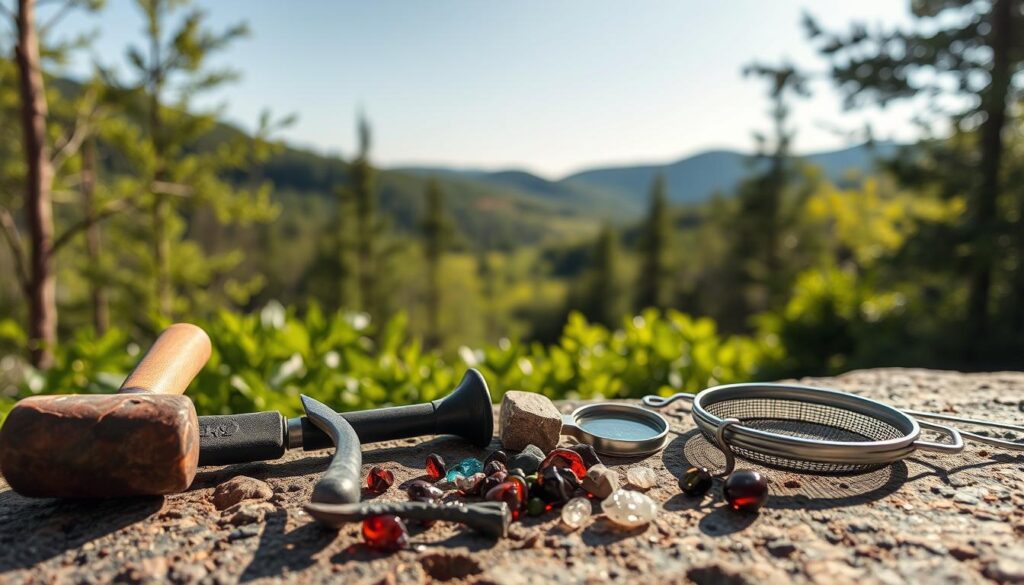
Basic tools include a rock hammer, safety glasses, gloves, collecting bags, and a field guide for mineral identification. A small shovel and sieve can help when searching stream gravels.
When is the best time to hunt for gemstones in Vermont?
Late spring through early fall provides the best conditions, with April through October offering optimal weather and accessibility to most collecting areas.
Final Thoughts
Common Gemstones Found In Vermont provide endless opportunities for discovery and collection throughout the Green Mountain State’s diverse geological landscape. From the official state gem garnet to unique formations like staurolite crosses, Vermont’s mineral wealth offers something for every collector’s interests and skill level.
Start your Vermont gemstone adventure by researching local geology and connecting with rock and mineral clubs in your area for guidance and group collecting opportunities.