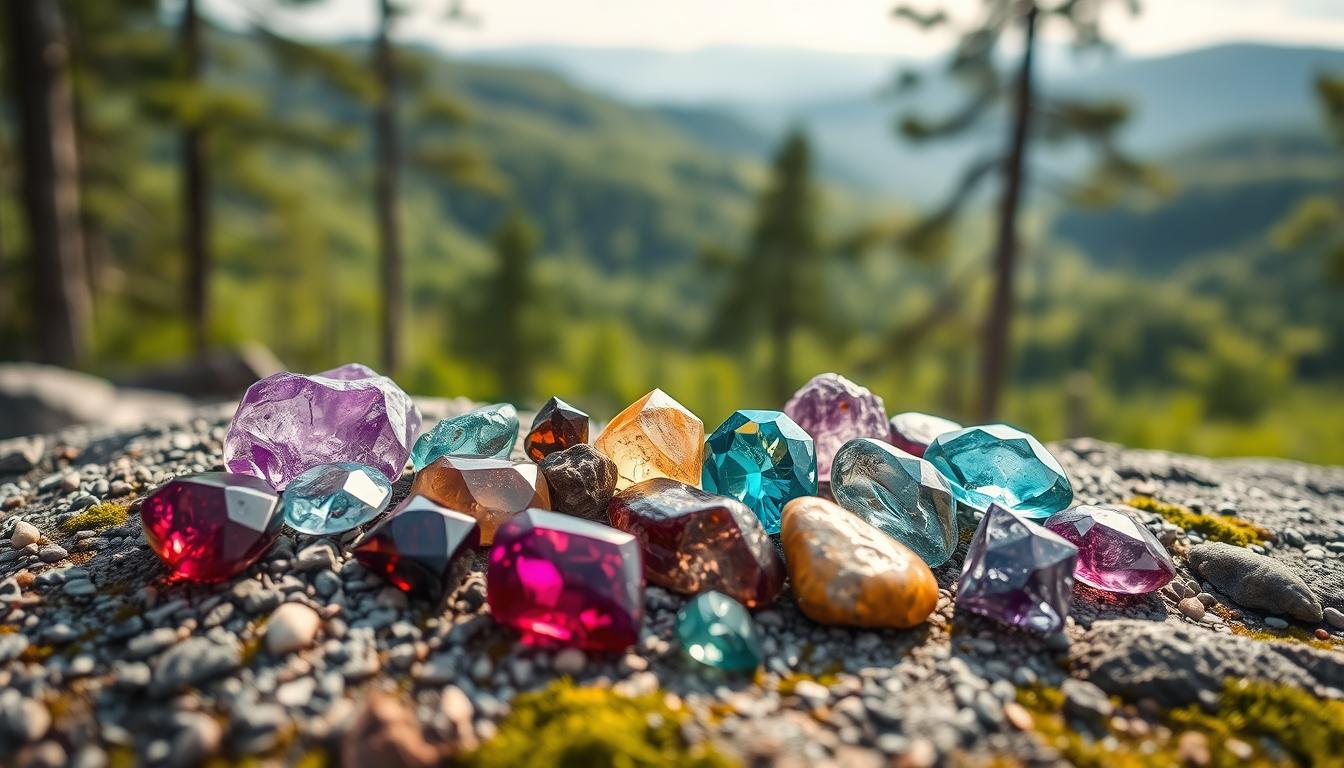
New Hampshire Gemstones offer some of the most exciting mineral collecting opportunities in New England. The Granite State’s rich geological history has created perfect conditions for finding beautiful gems and minerals. From the official state gemstone to rare mineral specimens, this northern state rewards patient collectors with amazing discoveries.
The state’s unique pegmatite formations hold the key to its gemstone wealth. These coarse-grained igneous rocks formed millions of years ago and contain large, well-formed crystals that make New Hampshire a top destination for rockhounds and gem enthusiasts alike.
TL;DR
- Smoky quartz is New Hampshire’s official state gemstone and can be found in over 50 locations statewide.
- The Ruggles Mine in Grafton offers public digging for $30 per day and yields amethyst, tourmaline, and quartz specimens.
- Spring and early summer provide the best conditions for gemstone hunting with accessible terrain and moderate weather.
- New Hampshire’s pegmatite formations contain more than 120 different mineral species including rare beryl varieties.
New Hampshire Gemstones: A Geological Overview
New Hampshire’s complex geological makeup stems from millions of years of tectonic activity and glacial movement. The state sits within the Appalachian Mountain system, where ancient volcanic activity created the pegmatite formations that house most gemstone deposits today.
These pegmatites formed during the final cooling stages of granite intrusions. As the magma cooled slowly, it allowed large crystals to develop – creating the perfect environment for gemstone formation across the state’s landscape.
The Granite State Foundation
New Hampshire earned its nickname from extensive granite formations that dominate the geological landscape. These granite bodies provide the foundation for the pegmatite dikes and veins where most gemstones are found.
The White Mountains region contains some of the most productive gemstone areas. Here, the combination of granite intrusions and metamorphic processes created ideal conditions for mineral formation over geological time, similar to what collectors find when exploring gemstones in Vermont with its comparable Appalachian geology.
Primary Gemstones of New Hampshire
Smoky Quartz – The State Gemstone
Smoky quartz holds the distinction of being New Hampshire’s official state gemstone since 1985. This variety of quartz gets its distinctive gray to black color from natural radiation exposure and aluminum impurities in the crystal structure.
You can find smoky quartz specimens throughout the state, with some of the finest examples coming from pegmatites in the White Mountains region. The best specimens display clear, well-formed crystals with deep smoky coloration that ranges from light gray to nearly black.
Amethyst Varieties
New Hampshire produces beautiful amethyst specimens, particularly from the famous mining locations in Grafton County. The state’s amethyst typically displays rich purple colors and often occurs alongside smoky quartz in the same pegmatite pockets.
Collectors prize New Hampshire amethyst for its clarity and color intensity. Some specimens also show interesting zoning patterns where different shades of purple create banded effects within individual crystals.
Beryl Family Gems
The beryl family provides some of New Hampshire’s most valuable gemstone discoveries. Aquamarine, the blue variety of beryl, occurs in several locations across the state and produces gem-quality specimens suitable for cutting.
Green beryl, while not technically emerald quality, still creates attractive specimens for collectors. These beryl varieties form in the same pegmatite environments as other New Hampshire gemstones and often occur as well-formed hexagonal crystals.
Lesser-Known Mineral Treasures
Tourmaline Specimens
New Hampshire tourmaline comes in several color varieties, with pink and green being most common. The Ruggles Mine has produced some exceptional tourmaline specimens over the years, including rare blue and watermelon varieties.
These tourmaline crystals often show excellent terminations and can reach several inches in length. Tourmaline gemstone collectors particularly value specimens that show multiple colors within single crystals.
Garnet Discoveries
Almandine garnet represents the most common garnet variety found in New Hampshire. These deep red crystals occur in mica-rich metamorphic rocks and pegmatite borders throughout the state.
The garnets typically form as well-shaped dodecahedral crystals. While most are too small or included for gem use, collectors can find attractive specimen-quality examples with good color and crystal form.
Topaz and Fluorite
Topaz occurs less frequently but produces exciting finds when discovered. New Hampshire topaz typically appears colorless to pale blue and forms excellent crystals in pegmatite cavities.
Fluorite adds another dimension to New Hampshire’s mineral diversity. Purple fluorite specimens have been found in several locations, often showing the characteristic cubic crystal habit and fluorescent properties under ultraviolet light.
Best Collecting Strategy
Focus your search on pegmatite exposures and old quarry sites during spring months when winter debris has cleared but summer vegetation hasn’t obscured rock faces. Always bring proper safety equipment and get landowner permission first.
Top Gemstone Hunting Locations
Ruggles Mine – Grafton
The Ruggles Mine stands as New Hampshire’s most famous gemstone collecting site. This historic mica mine now operates as a fee-dig location where visitors can search for amethyst, smoky quartz, tourmaline, and other minerals for a daily fee.
The mine features multiple levels of tunnels and open pits. Collectors regularly find quality specimens here, making it an excellent choice for both beginners and experienced rockhounds looking for amethyst gemstone specimens.
Palermo Mine – North Groton
The Palermo Mine has produced some of New Hampshire’s finest mineral specimens over the decades. While not always open to the public, organized field trips occasionally provide access to this world-class locality.
This pegmatite mine has yielded museum-quality tourmaline, beryl, and quartz specimens. The complex pegmatite system here contains over 100 different mineral species, making every visit potentially rewarding.
Diamond Ledge – Ossipee
Diamond Ledge offers easier access for casual collectors looking for quartz crystals and other common minerals. Despite the name, no actual diamonds occur here – the location got its name from the brilliant quartz crystals found in the area.
This location provides good collecting opportunities without requiring extensive hiking or special equipment. Families often choose Diamond Ledge for introduction to New Hampshire mineral collecting.
Essential Mining Equipment and Techniques
Successful gemstone hunting in New Hampshire requires proper equipment and techniques. Basic tools include a geological hammer, chisel set, safety glasses, and collection bags for specimens.
More advanced collectors might bring sledgehammers for breaking large rocks, screens for sorting material, and UV lights for identifying fluorescent minerals. Always prioritize safety equipment when working around rock faces and loose material.
- Geological hammer – Essential for breaking rocks and extracting specimens
- Chisels and wedges – For precise extraction of delicate crystals
- Safety glasses and gloves – Protection from flying rock chips
- Collection containers – Padded boxes or bags for transporting specimens
- Magnifying lens – For field identification of small crystals
Specimen Identification and Evaluation
Learning to identify New Hampshire gemstones in the field takes practice and knowledge of local geology. Key identification features include crystal form, color, hardness, and geological setting.
Quartz varieties show distinctive hexagonal crystal forms and glassy luster. Tourmaline crystals display triangular cross-sections and strong pleochroism. Beryl forms hexagonal crystals but with different proportions than quartz.
- Examine crystal form. Look for characteristic shapes that identify mineral families.
- Test hardness carefully. Use reference materials to determine relative hardness.
- Note geological context. Record where specimens were found for future reference.
- Document discoveries. Keep detailed records of locations and specimen details.
Legal Considerations and Best Practices
Most prime gemstone locations in New Hampshire occur on private property. Always obtain permission from landowners before collecting, and respect any restrictions they may impose.
Some areas require special permits or have seasonal restrictions. National and state forests may have specific regulations about mineral collecting, so check current rules before planning collecting trips to New Hampshire or when exploring similar opportunities in Maine gemstone locations just across the border.
Seasonal Collecting Strategies
Spring provides the best collecting conditions after winter frost has broken apart rock faces and exposed new material. Early summer offers good weather but requires dealing with increased vegetation that may hide productive areas.
Fall collecting can be productive as leaves fall and expose rock outcrops again. Winter collecting presents safety challenges but may provide access to frozen areas that are difficult to reach in other seasons.
Frequently Asked Questions
What is the most valuable gemstone found in New Hampshire?
Gem-quality aquamarine and fine tourmaline specimens represent the most valuable finds, with exceptional pieces worth hundreds of dollars to collectors.
Can beginners find quality specimens in New Hampshire?
Yes, locations like the Ruggles Mine and Diamond Ledge provide excellent opportunities for beginners to find attractive specimens with minimal experience required.
Are there any diamonds found in New Hampshire?
No genuine diamonds have been documented from New Hampshire. The name “Diamond Ledge” refers to brilliant quartz crystals, not actual diamonds.
What permits are needed for collecting in New Hampshire?
Most collecting requires landowner permission on private property. Some state and federal lands may require permits or prohibit collecting entirely.
When is the best time to visit New Hampshire for gemstone hunting?
Late spring through early fall provides the best weather and site access, with May and June being ideal for most locations.
Final Thoughts
New Hampshire Gemstones represent one of New England’s best-kept secrets for mineral collectors and gem enthusiasts. The state’s diverse geology and accessible locations make it perfect for weekend collecting trips or serious specimen hunting expeditions, offering experiences comparable to what rockhounds find in Massachusetts gemstone sites and other New England destinations.
Start planning your New Hampshire gemstone adventure today – the Granite State’s mineral treasures are waiting to be discovered by patient and prepared collectors.