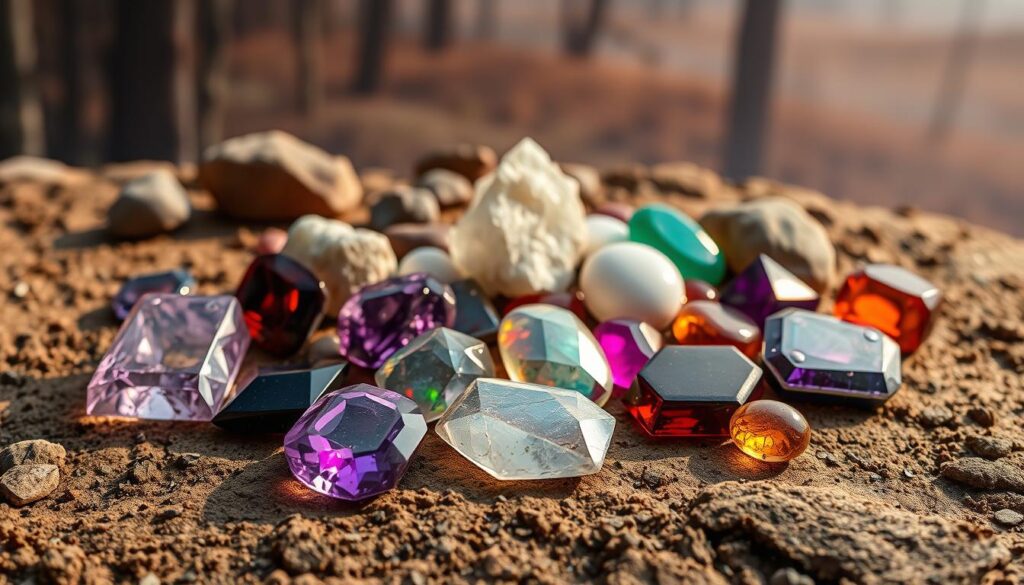
New Jersey Gemstones offer rockhounds an amazing variety of minerals to discover across the Garden State. The state’s rich geological history spans over a billion years, creating diverse mineral deposits that attract collectors from around the world.
From the famous fluorescent minerals at Franklin to the quartz crystals found throughout the Highlands, New Jersey provides endless opportunities for gemstone hunting. Whether you’re searching for garnets, prehnite, or the state’s unique Cape May diamonds, there’s something for every collector to find.
TL;DR
- Over 350 different mineral species have been identified in New Jersey, making it one of the most mineralogically diverse states.
- The Franklin-Sterling Hill area contains the world’s most famous fluorescent mineral locality with over 60 fluorescent species.
- Spring and fall are the best seasons for gemstone hunting, with temperatures ranging from 50-70°F for comfortable collecting.
- Private land requires written permission, while state parks generally prohibit collecting without special permits.
New Jersey Gemstones – A Collector’s Paradise
The Garden State’s geological diversity creates perfect conditions for finding numerous gemstone varieties. Tectonic activity over millions of years formed the mineral-rich deposits that make New Jersey a premier destination for rockhounds.
The state’s unique geology includes ancient Precambrian rocks in the Highlands and younger sedimentary formations along the coast. This combination produces an exceptional range of minerals, from common quartz to rare fluorescent species found nowhere else on Earth.
Most Common Gemstones Found in New Jersey
New Jersey hosts an impressive collection of gemstones that appeal to both beginners and experienced collectors. The state’s varied geological regions each offer different types of minerals and crystals.
Quartz Varieties
Quartz represents the most abundant gemstone family in New Jersey. Collectors can find several distinct varieties throughout the state, similar to the diverse quartz specimens found in neighboring New York.
- Smoky Quartz – Found in pegmatites across the Highlands region with colors ranging from light brown to nearly black.
- Clear Quartz – Abundant in many locations, often forming well-developed crystals perfect for display.
- Amethyst – Less common but present in certain localities, showing beautiful purple coloration.
- Rose Quartz – Discovered in pegmatite deposits, prized for its soft pink hues.
Garnet
Almandine garnet occurs widely throughout New Jersey’s metamorphic rocks. The Highlands region produces the finest specimens, with crystals reaching several inches in diameter.
These deep red garnets form in schist and gneiss formations. Many specimens show excellent crystal faces and can be faceted into beautiful gemstones, much like the exceptional garnet deposits found throughout Pennsylvania.
Beryl Group Minerals
While less common than quartz and garnet, beryl group minerals do occur in New Jersey. Aquamarine and emerald have both been reported from pegmatite localities in the state.
Fluorescent Minerals
New Jersey’s claim to fame in the mineral world comes from its fluorescent minerals. The Franklin-Sterling Hill area produces minerals that glow in brilliant colors under ultraviolet light.
- Willemite – Glows bright green under UV light
- Calcite – Shows red fluorescence
- Franklinite – Non-fluorescent but often associated with fluorescent species
- Zincite – Rare red mineral that fluoresces orange
UV Light Collecting Tip
Bring both shortwave and longwave UV lights when collecting fluorescent minerals. Many species show different colors or intensities under different wavelengths.
Best Locations for Gemstone Hunting
Several areas in New Jersey stand out as premier destinations for gemstone collectors. Each location offers unique opportunities and different types of minerals.
Franklin and Sterling Hill
These former zinc mines represent the world’s most famous fluorescent mineral locality. Over 350 mineral species have been identified here, with more than 60 showing fluorescence.
The Franklin Mineral Museum and Sterling Hill Mining Museum both offer collecting opportunities and educational programs. Visitors can explore underground tunnels and search through tailings piles for specimens.
Paterson Great Falls Area
The basalt flows around Paterson contain excellent prehnite specimens. This apple-green mineral forms in cavities within the ancient lava flows.
Collectors also find zeolite minerals, calcite, and occasionally small garnets in this area. The Great Falls themselves provide a dramatic backdrop for mineral collecting.
Delaware Water Gap
This scenic area along the Delaware River produces the famous “Cape May diamonds” – clear quartz crystals that wash out of Precambrian rocks. These water-worn crystals can be quite beautiful when properly cut and polished.
Highlands Region
The ancient rocks of the New Jersey Highlands contain numerous pegmatite deposits. These coarse-grained igneous rocks host a variety of minerals including feldspar, mica, and various gemstones.
- Sussex County – Known for excellent garnet specimens and occasional beryl finds
- Morris County – Produces good quartz crystals and fluorite
- Warren County – Contains several productive pegmatite localities
Essential Equipment for Gemstone Hunting
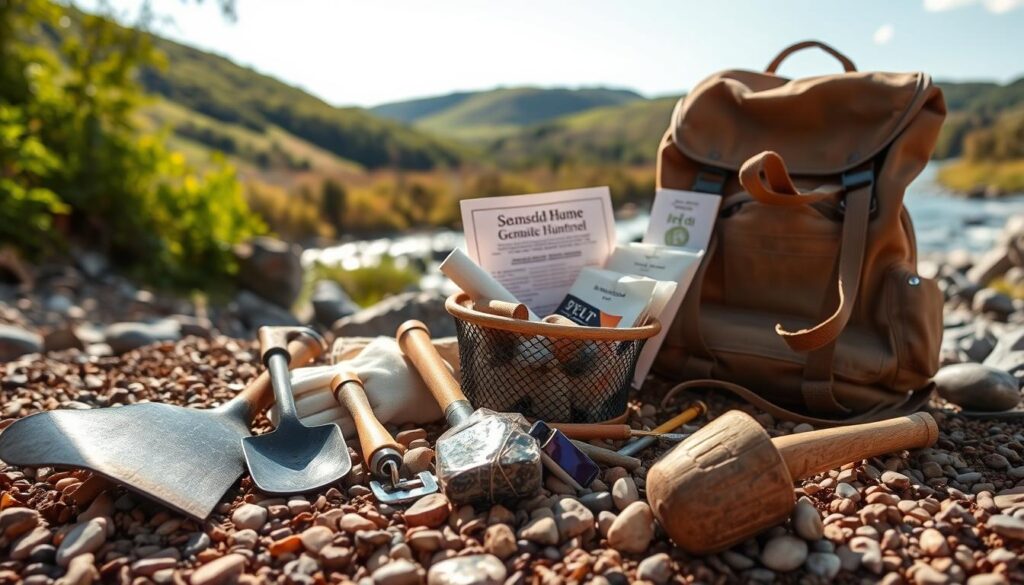
Successful gemstone hunting requires proper tools and preparation. Having the right equipment makes the difference between finding common rocks and discovering genuine gemstones.
Basic Tools
- Rock hammer. Choose a 16-20 oz hammer with a flat striking surface and chisel end.
- Cold chisels. Various sizes help split rocks and extract specimens safely.
- Safety glasses. Essential protection when breaking rocks or using tools.
- Work gloves. Protect hands from sharp edges and rough surfaces.
Collection and Identification Tools
- Hand lens (10x) – Examine crystal faces and mineral properties
- Hardness test kit – Identify minerals using the Mohs scale
- UV light – Essential for fluorescent mineral collecting
- Field notebook – Record location and specimen details
- Sample bags – Keep specimens organized and protected
Legal Considerations and Ethics
Understanding collecting laws and following ethical practices ensures continued access to collecting sites. New Jersey has specific regulations that all rockhounds must follow, similar to the collecting regulations found in nearby Connecticut.
Private Property
Always obtain written permission before collecting on private land. Many of New Jersey’s best localities are on private property, making landowner relationships crucial.
Respect property boundaries and follow any restrictions the landowner establishes. Clean up after yourself and avoid damaging fences, crops, or buildings.
Public Lands
Most state parks and forests prohibit mineral collecting without special permits. Contact park officials before visiting to understand current regulations.
Some areas allow limited collecting for personal use only. Commercial collecting typically requires special permits and may be restricted or prohibited entirely.
| Location Type | Permission Required | Typical Restrictions |
|---|---|---|
| Private Property | Written permission | Personal use only, respect boundaries |
| State Parks | Special permits | Often prohibited, check regulations |
| Mine Sites | Owner permission | Safety requirements, liability waivers |
Seasonal Collecting Tips
Timing your collecting trips properly increases success and comfort in the field. Different seasons offer unique advantages for gemstone hunting in New Jersey.
Spring Collecting (March-May)
Spring offers excellent conditions with mild temperatures and good visibility. Recent freeze-thaw cycles may expose new specimens in rock outcrops.
Watch for flooding in stream beds and quarries after heavy spring rains. These conditions can uncover fresh material but may also create safety hazards.
Fall Collecting (September-November)
Fall provides the most comfortable collecting conditions with cool temperatures and low humidity. Reduced vegetation makes it easier to spot specimens and access collecting sites, especially when exploring areas similar to those productive gemstone locations found throughout Vermont.
This season offers the best conditions for extended field trips and careful specimen extraction. Many collectors consider fall the prime season for serious gemstone hunting.
Frequently Asked Questions
What are the most valuable gemstones found in New Jersey?
The most valuable finds include high-quality garnets suitable for faceting, rare beryl varieties like emerald and aquamarine, and exceptional fluorescent mineral specimens from Franklin-Sterling Hill.
Can beginners successfully find gemstones in New Jersey?
Yes, beginners can find success by starting with common minerals like quartz and garnet in easily accessible locations. Joining local mineral clubs provides valuable guidance and access to collecting sites.
Do I need special training to collect fluorescent minerals?
No special training is required, but understanding UV safety and having proper lighting equipment helps. Many museums offer workshops on fluorescent mineral collecting techniques.
What’s the best way to clean New Jersey gemstones?
Start with gentle soap and water, using soft brushes for delicate crystals. Avoid harsh chemicals that might damage specimens, and research proper cleaning methods for specific mineral types.
Are there guided gemstone tours available in New Jersey?
Yes, several organizations offer guided tours, particularly at Franklin and Sterling Hill. Local mineral clubs also organize group collecting trips throughout the year.
Final Thoughts
New Jersey Gemstones provide endless opportunities for collectors of all skill levels to discover beautiful specimens. The state’s unique geological history has created one of the most diverse mineral collecting areas in the United States.
Start your collecting journey at one of the famous localities like Franklin or the Delaware Water Gap, and gradually explore other areas as you gain experience. Remember to always collect responsibly and respect both private property and natural areas.