Michigan’s rich geological history has made it a treasure trove for rockhounds and gem enthusiasts. From Lake Superior agates to the state’s official gemstone chlorastrolite, Michigan offers incredible diversity for collectors of all skill levels.
The state’s unique combination of volcanic activity, ancient sea beds, and glacial movement has created perfect conditions for gemstone formation. Whether you’re searching along Great Lakes shorelines or exploring inland locations, Michigan delivers some of North America’s most distinctive mineral specimens.
TL;DR
- Michigan hosts over 12 different types of gemstones including agates, Petoskey stones, and copper specimens.
- Lake Superior’s shoreline produces the highest quality agates, especially after spring storms expose fresh specimens.
- Petoskey stones are found exclusively in Michigan’s northern Lower Peninsula beaches around Petoskey State Park.
- Yooperlites glow bright orange under UV light and are only found along Lake Superior’s Michigan shoreline.
Common Gemstones Found in Michigan
Michigan’s geological diversity creates ideal conditions for both precious and semi-precious stones. The state’s complex history of volcanic activity, glacial movement, and ancient sea beds has produced a remarkable variety of collectible minerals.
Lake Superior Agates
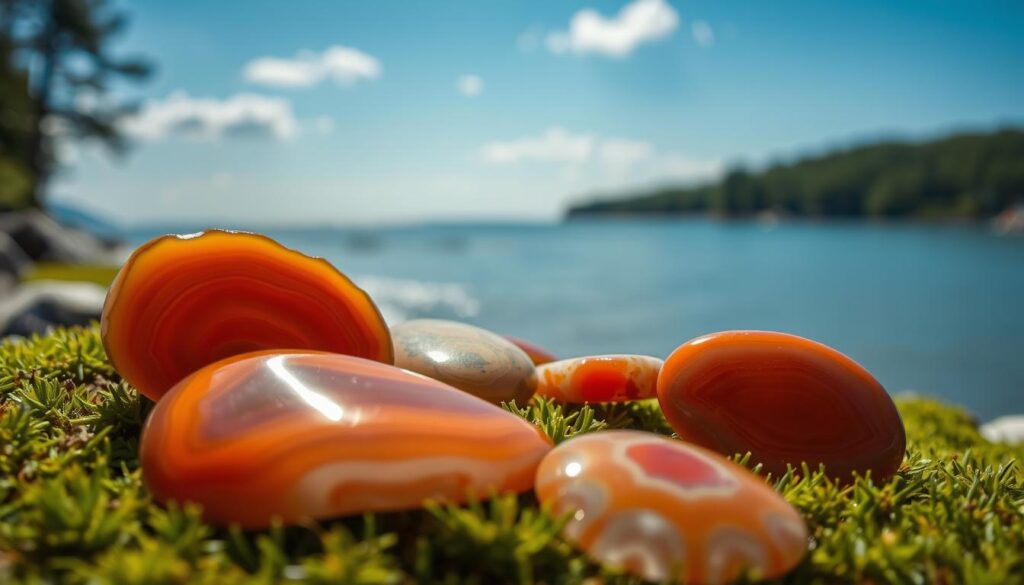
Lake Superior agates rank among Michigan’s most prized gemstones. These stones formed over a billion years ago when volcanic lava flows created cavities that later filled with silica-rich solutions.
The distinctive red and orange banding comes from iron oxide deposits. You’ll recognize authentic Lake Superior agates by their translucent quality and well-defined color bands ranging from deep red to bright orange, yellow, and white.
- Color patterns – Distinct banding in red, orange, yellow, and white
- Transparency – Translucent to semi-translucent when held to light
- Size range – From thumbnail-sized to specimens over 12 inches across
- Formation age – Over 1 billion years old
Petoskey Stones
Petoskey stones are actually fossilized coral from ancient tropical seas that covered Michigan 350 million years ago. The hexagonal patterns you see are the remains of individual coral polyps that once lived in warm, shallow waters.
These stones get their name from the Petoskey area where they’re commonly found. The best specimens show clear hexagonal patterns and take a beautiful polish that highlights the coral structure.
Chlorastrolite (Michigan Greenstone)
Chlorastrolite serves as Michigan’s official state gemstone and ranks among the world’s rarest minerals. This green stone features a unique star-like or turtle-shell pattern created by tiny radiating crystals.
Most chlorastrolite comes from Isle Royale, though small amounts appear in other Upper Peninsula locations. The mineral’s scarcity and distinctive appearance make it highly valuable among collectors.
Copper and Silver Specimens
Michigan’s Keweenaw Peninsula produced some of the world’s purest native copper specimens. These aren’t technically gemstones, but their crystalline formations and natural beauty make them highly sought after by collectors.
Silver often occurs alongside copper, creating stunning composite specimens. The Copper Country mines yielded incredible examples of these metals in their pure, crystalline forms.
Yooperlites
Yooperlites represent one of Michigan’s newest gemstone discoveries. These fluorescent rocks contain sodalite minerals that glow bright orange under ultraviolet light.
Found exclusively along Lake Superior’s Michigan shoreline, yooperlites appear as ordinary gray rocks in daylight. Under UV light, they transform into glowing specimens that have captivated collectors since their discovery in 2017.
Storm Hunting Strategy
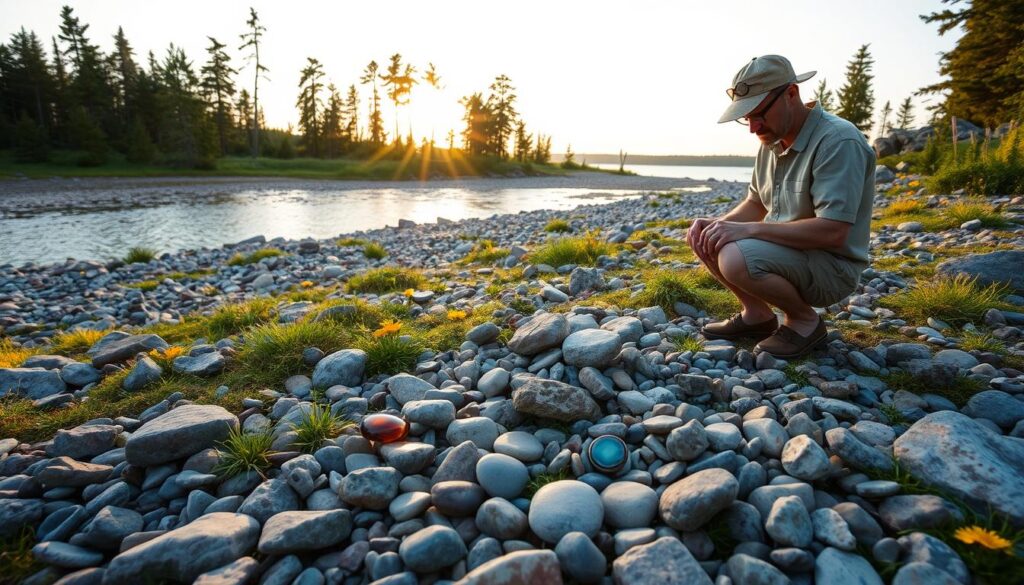
Visit beaches within 24-48 hours after major storms for the best gemstone hunting. Wave action uncovers fresh specimens and washes away sand that normally covers good finds.
Best Gemstone Hunting Locations
Michigan’s diverse landscape offers excellent gemstone hunting opportunities from the rugged Upper Peninsula to the sandy beaches of the Lower Peninsula. Each region produces different types of stones based on local geological conditions.
Upper Peninsula Hotspots
The Upper Peninsula delivers Michigan’s richest gemstone hunting experiences. The region’s volcanic history and mineral deposits create ideal conditions for finding various specimens.
- Keweenaw Peninsula – Prime location for copper specimens and agates
- Porcupine Mountains – Excellent for agates and jaspers
- Grand Marais area – Known for Lake Superior agates and beach stones
- Copper Harbor beaches – Yooperlites and copper specimens
Lake Superior Shoreline
Lake Superior’s Michigan shoreline offers the state’s best agate hunting. The lake’s wave action constantly sorts and polishes stones, concentrating the best specimens along certain beaches, similar to what you might find in Minnesota’s Lake Superior agate deposits.
Popular collecting areas include Grand Marais, Copper Harbor, and the shores near Marquette. Spring storms often expose fresh specimens by washing away accumulated sand and debris.
Lower Peninsula Locations
The Lower Peninsula specializes in Petoskey stones and other fossilized specimens. Northern beaches provide the best hunting grounds for these distinctive coral fossils.
- Petoskey State Park – Classic location for Petoskey stones and other fossils
- Sleeping Bear Dunes beaches – Various agates and beach stones
- Warren Dunes State Park – Good for general rock collecting
Identification and Collection Techniques
Successful gemstone hunting in Michigan requires knowing what to look for and having the right approach. Different stones have specific characteristics that help with identification in the field.
Field Identification Tips
Learn to identify Michigan gemstones by their key characteristics. Agates show banding and translucency, while Petoskey stones display hexagonal coral patterns.
Carry a small spray bottle to wet stones for better visibility of patterns and colors. Many stones that appear ordinary when dry reveal beautiful characteristics when moistened.
- Wet test – Spray stones with water to reveal colors and patterns
- Weight test – Agates feel heavier than ordinary rocks of similar size
- Light test – Hold translucent stones up to sunlight
- Pattern recognition – Look for banding, hexagonal shapes, or crystalline structures
Essential Equipment
Pack the right tools to maximize your gemstone hunting success. A basic kit doesn’t need to be expensive but should include items that help you find, identify, and safely collect specimens.
- Rock hammer – For breaking larger rocks or removing specimens
- Hand lens – 10x magnification for detailed examination
- Spray bottle – To wet stones for better visibility
- Collection bags – Separate bags for different types of finds
- UV flashlight – Essential for finding yooperlites
- Gloves – Protect hands from sharp edges
Best Hunting Conditions
Timing your hunting trips correctly dramatically improves your success rate. Weather conditions and seasonal factors play important roles in what you’ll find, similar to the optimal conditions rockhounds experience when searching for Wisconsin’s diverse gemstone deposits.
Spring offers the best hunting conditions after ice-out when winter storms have rearranged beach materials. Fall storms also create excellent hunting opportunities by exposing fresh specimens.
| Season | Best For | Conditions |
|---|---|---|
| Spring | All gemstones | Post-storm cleanup reveals fresh specimens |
| Summer | Systematic searching | Stable conditions for thorough hunting |
| Fall | Storm finds | High wave action exposes new material |
| Winter | Limited access | Ice formation restricts beach access |
Legal and Ethical Considerations
Responsible gemstone hunting protects Michigan’s natural resources and ensures access for future collectors. Understanding regulations and following ethical practices keeps collecting areas open and productive.
Public vs Private Land
Always verify land ownership before collecting specimens. Public beaches and designated collecting areas allow gemstone hunting, but private property requires permission from landowners.
State parks typically permit collecting small specimens for personal use, but check specific park regulations. Some protected areas prohibit all collecting to preserve natural resources.
Collection Limits and Guidelines
Practice responsible collecting by taking only what you need and leaving areas undisturbed. Most public lands allow reasonable amounts for personal use but prohibit commercial collecting, following similar guidelines to those found in Ohio’s gemstone collecting areas.
- Take only what you need – Avoid over-collecting from productive sites
- Leave no trace – Fill holes and clean up after hunting
- Respect others – Share information and help fellow collectors
- Follow regulations – Observe posted rules and seasonal restrictions
Frequently Asked Questions
What are the most valuable gemstones found in Michigan?
Chlorastrolite ranks as Michigan’s most valuable gemstone due to its rarity and status as the state stone. High-quality Lake Superior agates and large Petoskey stones also command good prices among collectors.
Can you find gemstones year-round in Michigan?
Spring through fall offers the best conditions for gemstone hunting. Winter ice makes many beaches inaccessible, though some inland locations remain available for experienced collectors.
Do I need special permits to collect gemstones in Michigan?
Most public beaches allow personal collecting without permits. State parks may have specific rules, and private property always requires landowner permission.
How can I tell if a stone is a real Lake Superior agate?
Authentic Lake Superior agates show distinct color banding, translucency when held to light, and feel heavier than similar-sized rocks. The banding should be well-defined with typical red, orange, and white coloration.
Where is the best place to find Yooperlites?
Yooperlites are found exclusively along Lake Superior’s Michigan shoreline, particularly around the Keweenaw Peninsula. You need a UV flashlight to identify them since they appear as ordinary rocks in daylight.
What time of year produces the most Petoskey stones?
Spring and fall storms expose the most Petoskey stones by washing sand away from northern Michigan beaches. Early morning hunting after storms often yields the best specimens.
Final Thoughts
Common Gemstones Found in Michigan offer incredible diversity for collectors ranging from beginners to advanced rockhounds. The state’s unique geological history has created conditions perfect for finding everything from ancient coral fossils to rare fluorescent minerals, rivaling the gemstone diversity found in neighboring states like Illinois’s diverse mineral deposits.
Start your Michigan gemstone adventure by visiting established collecting areas during optimal conditions. With patience and the right knowledge, you’ll discover why Michigan ranks among North America’s top destinations for gemstone hunting.