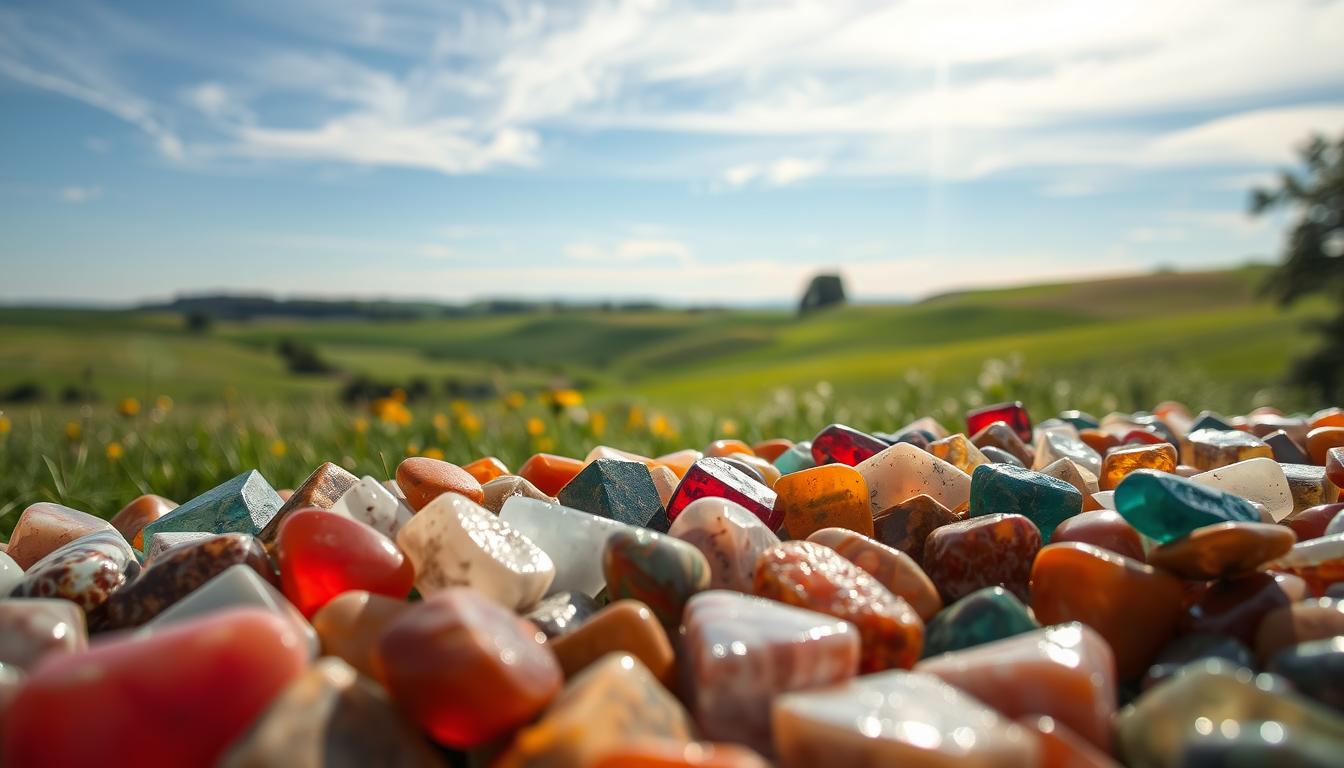
Iowa Gemstones offer collectors and geology enthusiasts a fascinating glimpse into the state’s rich geological heritage. The Prairie State may be known for its farmland, but beneath the surface lies a treasure trove of minerals and gems waiting to be discovered.
From sparkling quartz varieties to colorful agates and mysterious geodes, Iowa’s diverse geological landscape provides excellent opportunities for rockhounds of all skill levels. The state’s unique formation history, shaped by ancient glacial activity and sedimentary deposits, creates ideal conditions for gemstone formation and discovery.
TL;DR
- Iowa contains over 15 different types of gemstones including quartz, agate, jasper, and geodes found in specific geological formations.
- The Keokuk region produces 80% of Iowa’s famous geodes, with specimens ranging from baseball-sized to massive 3-foot specimens.
- Spring and fall offer the best gem hunting conditions with 60-70°F temperatures and increased water flow exposing new deposits.
- Lake Superior agates can be found up to 300 miles from their source due to glacial transport during the last ice age.
Iowa Gemstones: A Geological Overview
Iowa’s gemstone deposits formed over millions of years through a combination of glacial activity and sedimentary rock formation. Ancient glaciers scraped across the landscape, depositing minerals and creating the conditions necessary for gem formation.
The state’s bedrock consists primarily of limestone, sandstone, and shale layers that date back hundreds of millions of years. These sedimentary formations provide the perfect environment for silica-rich solutions to crystallize into the beautiful specimens found today.
Glacial Influence on Gem Distribution
The last ice age played a crucial role in distributing gemstones across Iowa’s landscape. Glaciers carried materials from as far north as Canada, depositing them throughout the state as they retreated.
This glacial activity explains why you can find Lake Superior agates hundreds of miles from their original source. The ice sheets acted like massive conveyor belts, transporting these colorful specimens southward into Iowa’s river valleys and fields, similar to the way agates were distributed to neighboring states like Minnesota and Wisconsin.
Types of Gemstones Found in Iowa
Iowa hosts an impressive variety of gemstones, each with unique characteristics and formation stories. Understanding these different types helps collectors know what to look for and where to search.
Quartz Varieties
Quartz represents the most common gemstone group found throughout Iowa. These silicon dioxide crystals form in various colors and clarity levels depending on trace elements present during formation, much like the diverse quartz varieties found in neighboring Illinois.
- Clear Quartz – Crystal-clear specimens used in jewelry and healing practices, found in limestone cavities.
- Smoky Quartz – Gray to brown varieties colored by natural radiation exposure over geological time.
- Rose Quartz – Pink specimens colored by titanium, iron, or manganese inclusions, relatively rare in Iowa.
- Amethyst – Purple quartz colored by iron impurities, occasionally found in geodes and rock cavities.
Agates and Jaspers
These banded chalcedony varieties showcase Iowa’s most colorful gemstone specimens. Agates form in gas bubbles within volcanic rocks, while jaspers develop in sedimentary environments.
Lake Superior agates stand out as Iowa’s most prized specimens, featuring distinctive red, orange, and white banding patterns. These gems originally formed in lava flows around Lake Superior before glacial transport brought them to Iowa.
Geodes
Iowa’s geodes are world-famous among collectors and represent the state’s most iconic gemstone find. These hollow spherical rocks contain crystal-lined cavities that formed when mineral-rich groundwater filled empty spaces in limestone.
The best Iowa geodes come from Mississippian limestone formations, particularly in the southeastern counties. Inside these plain-looking rocks, collectors discover stunning quartz crystals, calcite formations, and occasionally rare minerals like pyrite or fluorite.
Geode Hunting Success Tip
Look for round, heavy rocks with a chalky or bumpy exterior surface. Shake suspected geodes near your ear – hollow ones often produce a slight rattling sound from loose crystals inside.
Prime Gemstone Hunting Locations
Certain regions of Iowa consistently produce better gemstone specimens due to their geological characteristics and accessibility. Knowing these hotspots increases your chances of successful collecting.
Eastern Iowa Hotspots
The Mississippi River Valley offers excellent hunting grounds for agates and quartz specimens. River action constantly exposes new material from gravel bars and streambed deposits.
The Keokuk region in southeastern Iowa ranks as the state’s premier geode hunting destination. This area’s Warsaw Formation limestone contains the geological conditions that created Iowa’s famous geodes millions of years ago.
Central Iowa Discoveries
Central Iowa’s creek beds and gravel pits yield consistent finds of quartz varieties and jasper specimens. Des Moines River tributaries particularly reward patient collectors with colorful jasper pieces and clear quartz crystals.
Construction sites and road cuts in this region sometimes expose fresh material, though always obtain permission before collecting on private property.
Southern Iowa Gem Deposits
Decatur and Wayne counties contain significant gemstone deposits in their stream systems. These areas produce both geodes and agates, making them popular destinations for weekend rockhounding trips.
The region’s rolling hills and numerous creek systems provide multiple hunting opportunities within relatively small geographic areas, similar to the productive collecting areas found across the border in Missouri.
Identification Techniques
Proper identification helps collectors understand their finds and determine specimen value. Learning basic testing methods allows field identification of most Iowa gemstones.
Physical Characteristics
Color represents the most obvious identification feature, though it can vary significantly within gemstone types. Luster – how light reflects from the surface – provides more reliable identification clues.
Hardness testing using the Mohs scale helps distinguish between similar-looking minerals. Quartz varieties rate 7 on the scale, while calcite measures only 3, making scratch tests useful for basic identification.
Simple Field Tests
A streak test involves rubbing the specimen across unglazed ceramic to observe the powder color produced. This method works particularly well for identifying different jasper types and distinguishing them from similar minerals.
The specific gravity test – comparing specimen weight to an equal volume of water – helps identify dense minerals like hematite or pyrite that might be mistaken for other specimens.
Best Practices for Successful Hunting
Successful gemstone hunting requires proper preparation, appropriate equipment, and knowledge of optimal conditions. Following proven techniques increases your chances of making significant discoveries.
Essential Equipment
- Rock hammer. A geological hammer with a flat striking surface and sharp pick end for breaking rocks and extracting specimens.
- Hand lens. A 10x magnification lens for examining crystal structures and identifying key features in the field.
- Sifting screens. Different mesh sizes help separate gemstones from surrounding gravel and sediment.
- Collection containers. Sturdy buckets and smaller containers with padding protect specimens during transport.
Optimal Timing and Conditions
Spring months following snowmelt provide excellent hunting conditions as streams run high and expose fresh material. Fall hunting after harvest season opens access to farm fields where surface specimens might be found.
Recent rainfall improves hunting success by washing away surface dirt and debris, making gemstones more visible against clean rock and gravel surfaces.
Legal Considerations
Understanding property rights and regulations protects collectors from legal issues while maintaining positive relationships with landowners. Iowa law generally allows collection on public lands with some restrictions.
Always obtain written permission before collecting on private property, and respect any limitations the landowner establishes. Many farmers welcome respectful collectors who ask permission and follow basic courtesy guidelines.
State parks and preserves typically prohibit collecting, though some areas may allow limited surface collection with proper permits. Contact Iowa Department of Natural Resources park officials for specific regulations before planning collecting trips.
Frequently Asked Questions
What are the most valuable gemstones found in Iowa?
Lake Superior agates and high-quality geodes with crystal interiors represent Iowa’s most valuable specimens, often selling for $50-500 depending on size and quality.
Can I find gemstones in Iowa without special equipment?
Yes, surface hunting along streams and gravel roads often yields specimens visible to the naked eye, though basic tools like a hand lens improve identification success.
Are Iowa’s gemstones suitable for jewelry making?
Many Iowa specimens work well for jewelry, particularly agates and clear quartz varieties that can be cut and polished into attractive cabochons and faceted stones.
What time of year offers the best gemstone hunting in Iowa?
Spring and fall provide optimal conditions with moderate temperatures and increased stream flow that exposes new material, while winter hunting is limited by frozen ground conditions.
Do I need permits to collect gemstones in Iowa?
Public land collecting may require permits depending on the specific location, while private land collection requires landowner permission but typically no special permits.
Final Thoughts
Iowa Gemstones provide endless opportunities for discovery and learning about the state’s geological heritage. Whether you’re searching for your first geode or building a serious mineral collection, Iowa’s diverse landscape offers something for every collector.
Start your gemstone hunting adventure this weekend by visiting a local stream or contacting area rock clubs for group collecting trips. If you’re interested in expanding your gemstone hunting beyond Iowa, consider exploring the diverse mineral wealth of nearby states like Nebraska and Kansas.