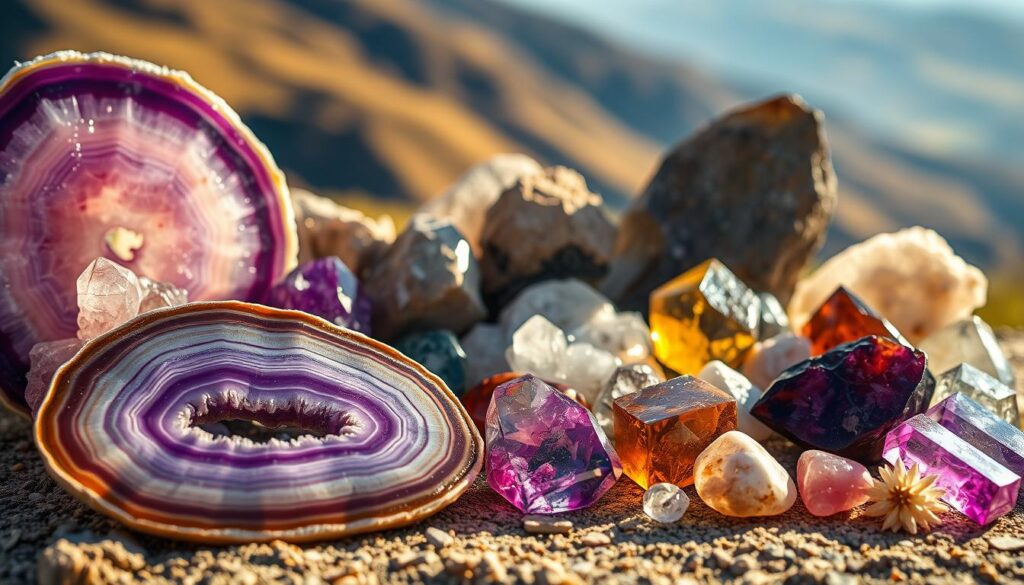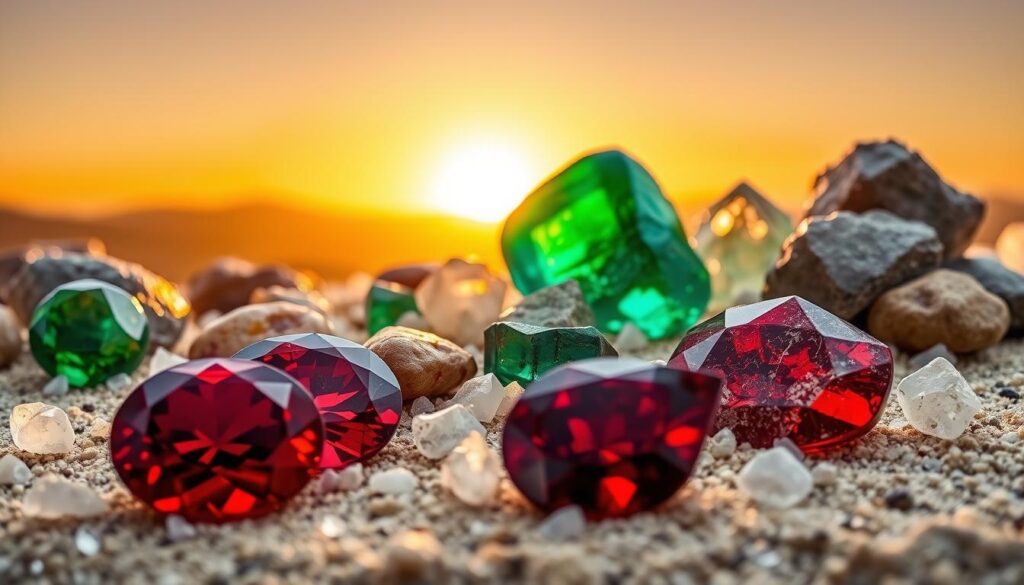
California is famous for its rich geological history and diverse gemstone deposits scattered throughout the state. The Golden State’s landscapes, from the rugged Pacific coastline to the towering Sierra Nevada mountains, hold countless treasures waiting to be discovered by rockhounds and collectors.
Common Gemstones In California include quartz varieties, tourmaline, garnet, and the rare benitoite – California’s official state gemstone. These beautiful stones formed over millions of years through complex geological processes that continue to shape the state’s mineral-rich terrain today.
TL;DR
- San Diego County produces over 70% of California’s tourmaline, including the famous “watermelon” variety with pink centers and green edges.
- Benitoite, found only in San Benito County, is 10 times rarer than diamonds and glows blue under UV light.
- Spring and fall offer the best collecting conditions with mild weather and exposed ground after winter rains.
- Over 40 fee-dig sites across California allow public gemstone collecting for $10-50 per day.
Common Gemstones In California Overview
California’s gemstone wealth comes from its position along active tectonic plate boundaries and diverse rock formations. The state sits where the Pacific Plate meets the North American Plate, creating the perfect conditions for gemstone formation through millions of years of geological activity.
The most abundant gemstones include several quartz varieties, colorful tourmalines, deep red garnets, and members of the beryl family. Each region specializes in different types based on local geology and formation processes, similar to what collectors find in Colorado’s diverse geological formations.
Geological Formation Process
Most California gemstones formed in pegmatite deposits – large crystalline formations that develop when magma cools slowly deep underground. These deposits concentrate rare elements and minerals into spectacular crystal formations that can grow quite large.
Hydrothermal activity also played a major role, with hot mineral-rich fluids circulating through rock fractures and depositing gemstone materials over time. This process created many of the state’s famous quartz specimens and other treasures.
Quartz Varieties – California’s Most Common Gems
Quartz represents the most widespread gemstone family in California, appearing in nearly every county. These silicon dioxide crystals come in an amazing range of colors and formations that attract collectors worldwide.
Amethyst
Purple amethyst crystals range from pale lavender to deep violet, with the most valuable specimens showing rich, saturated color throughout. The Jackson Mine in Amador County and areas around Lake Almanor produce some of California’s finest amethyst specimens.
Collectors prize amethyst geodes – hollow rocks lined with purple crystals that formed in ancient gas bubbles within volcanic rock. These natural treasure chests can weigh hundreds of pounds and contain thousands of individual crystals.
Citrine and Smoky Quartz
Natural citrine displays golden yellow to orange colors and forms under specific temperature conditions deep underground. Most commercial citrine actually comes from heat-treated amethyst, making natural specimens much more valuable to collectors.
Smoky quartz gets its gray to black color from natural radiation exposure over millions of years. California produces exceptional smoky quartz specimens, particularly in the Sierra Nevada region where granite formations provide ideal conditions.
Specialty Quartz Formations
Rutilated quartz contains golden needle-like rutile crystals frozen inside clear quartz, creating stunning internal landscapes. Phantom quartz shows ghostly outlines of earlier crystal growth stages, telling the story of changing conditions during formation.
- Phantom Quartz – displays ghostly crystal outlines from interrupted growth periods
- Rutilated Quartz – contains golden rutile needles creating internal star patterns
- Rose Quartz – shows pink color from trace titanium or manganese inclusions
- Chalcedony – microcrystalline quartz forming colorful bands and patterns
Tourmaline – California’s Colorful Pride
California ranks among the world’s top tourmaline producers, with San Diego County mines yielding spectacular specimens since the late 1800s. These complex boron silicate minerals display an incredible range of colors and crystal habits.
The Famous Pala District
The Pala mining district in San Diego County has produced millions of dollars worth of gem-quality tourmaline over the past century. The Tourmaline Queen Mine, Himalaya Mine, and other famous sites continue operating today, offering both specimens and visitor experiences.
Pink tourmaline from these mines once supplied Chinese imperial courts, with the Dowager Empress Cixi reportedly owning a pillow carved from a single massive pink tourmaline crystal. This historical connection helped establish California tourmaline’s worldwide reputation.
Watermelon Tourmaline
The prized “watermelon” tourmaline shows pink cores surrounded by green outer zones, mimicking the fruit it’s named after. These bi-colored crystals form when changing chemical conditions during growth create distinct color zones within single crystals.
Top-quality watermelon tourmaline specimens can sell for thousands of dollars per carat, making them among California’s most valuable gemstone discoveries. The best examples show sharp color transitions and minimal inclusions.
Tourmaline Hunting Tip
Look for tourmaline in decomposed granite areas after heavy rains when crystals wash out of soft rock. The distinctive triangular crystal cross-sections help identify tourmaline specimens in the field.
Garnet and Other Notable Gemstones
California produces several garnet varieties, with almandine and spessartite garnets found in metamorphic rock formations throughout the state. These deep red to orange gemstones often occur in well-formed dodecahedral crystals perfect for jewelry use.
Beryl Family Gems
The beryl family includes aquamarine, morganite, and emerald varieties found in California’s pegmatite deposits. While emerald remains rare, collectors regularly find beautiful aquamarine and pink morganite specimens in San Diego County mines, much like the aquamarine deposits found in Colorado’s mountainous regions.
- Aquamarine – blue to blue-green beryl found in pegmatite pockets
- Morganite – peachy-pink beryl valued for its soft color tones
- Golden Beryl – yellow variety occasionally found in mountain districts
Jade and Jasper
California jade comes in both jadeite and nephrite varieties, with the Big Sur coastline producing stunning green specimens polished smooth by ocean waves. Jasper occurs in amazing patterns and colors throughout the state, from the famous Poppy Jasper to scenic agate formations.
Coastal collecting areas offer the best jade hunting opportunities, particularly after winter storms expose fresh material. Look for the characteristic waxy luster and tough, compact texture that distinguishes jade from similar-looking stones.
Benitoite – California’s Rare State Gemstone
Benitoite holds the unique distinction of being found naturally in only one location worldwide – the Benitoite Gem Mine in San Benito County, California. This rare blue gemstone became California’s official state gemstone in 1985.
Unique Properties
Benitoite crystals display brilliant blue fluorescence under ultraviolet light, making them easy to identify in the field with a UV lamp. The mineral forms distinctive triangular crystals that can reach several carats in size, though most specimens remain under one carat.
With hardness of 6-6.5 on the Mohs scale, benitoite makes an excellent jewelry stone despite its extreme rarity. Fine specimens sell for $3,000-4,000 per carat, placing benitoite among the world’s most expensive gemstones.
Best Locations for Gemstone Collecting
California offers numerous public collecting areas, fee-dig sites, and mine tours where rockhounds can search for gemstones legally and safely. Each region specializes in different types based on local geology and accessibility.
San Diego County Hotspots
San Diego County leads California in gemstone diversity and production, with over 100 known mineral species found in the area. The Pala, Ramona, and Mesa Grande districts offer the best collecting opportunities for tourmaline, beryl, and quartz specimens.
- Pala Chief Mine. Fee-dig site offering tourmaline and beryl hunting experiences with tools provided.
- Oceanview Mine. Public collecting area known for morganite and aquamarine specimens.
- Himalaya Mine. Historic tourmaline producer offering guided tours and collecting opportunities.
Northern California Locations
Northern California’s volcanic and metamorphic terrain produces excellent quartz specimens, jade, and serpentine formations. The Clear Creek area, Glass Mountain, and coastal beaches provide diverse collecting experiences.
Many Forest Service and Bureau of Land Management areas allow small-scale collecting for personal use without permits. Always check current regulations and seasonal closures before planning collecting trips.
Central Valley and Sierra Nevada
The Sierra Nevada foothills contain numerous quartz localities, particularly around old mining districts where prospectors disturbed the ground decades ago. Spring snowmelt often exposes fresh material in creek beds and road cuts, similar to the seasonal opportunities that Montana rockhounds experience when mountain snows melt.
| Region | Primary Gemstones | Best Season |
|---|---|---|
| San Diego County | Tourmaline, Beryl, Quartz | Fall/Winter |
| Northern California | Jade, Jasper, Quartz | Spring/Summer |
| Sierra Nevada | Quartz varieties, Gold | Spring/Fall |
Collecting Tips and Regulations
Successful gemstone collecting requires proper tools, knowledge of local regulations, and understanding of seasonal conditions. California has specific rules governing collecting on public lands that protect both collectors and the environment.
Essential Equipment
Basic collecting gear includes a rock hammer, chisel set, safety glasses, gloves, and sturdy collecting bags or buckets. A magnifying glass helps identify small specimens, while a UV light proves invaluable for finding fluorescent minerals like benitoite.
Many collectors also carry field guides, GPS units, and first aid supplies when venturing into remote areas. Proper footwear and sun protection become critical during long days in California’s varied terrain.
Legal Considerations
Most public lands allow collecting small amounts of common rocks and minerals for personal use without permits. However, commercial collecting, large-scale removal, and collecting in wilderness areas or state parks often requires special permissions.
Private property collecting requires landowner permission, and many former mining claims remain under private ownership despite appearing abandoned. When in doubt, contact local ranger stations or collecting clubs for current information, just as collectors do in other western states like Nevada’s complex land ownership areas.
Frequently Asked Questions
What are the most valuable gemstones found in California?
Benitoite ranks as California’s most valuable gemstone, selling for $3,000-4,000 per carat due to its extreme rarity. High-quality tourmaline, especially watermelon varieties, can also command premium prices of several hundred to thousands of dollars per carat.
When is the best time to hunt for gemstones in California?
Spring and fall offer ideal collecting conditions with mild temperatures and good visibility. Winter rains often expose fresh material, making early spring particularly productive for finding newly weathered specimens.
Do I need permits to collect gemstones in California?
Small-scale personal collecting on most public lands requires no permits, but commercial collecting and large-scale removal need special permissions. Always check with land management agencies before collecting in unfamiliar areas.
Where can beginners start gemstone hunting in California?
Fee-dig sites like the Oceanview Mine or guided tours at places like the Himalaya Mine provide excellent starting points with tools, instruction, and guaranteed opportunities to find specimens. Local rock and mineral clubs also offer field trips and educational programs.
How can I identify gemstones I find in the field?
Learn basic tests for hardness, crystal shape, color, and luster to identify common varieties. Carry a field guide with color photos and consider joining local mineral societies where experienced collectors can help with identifications.
Final Thoughts
Common Gemstones In California offer endless opportunities for collectors, from weekend rockhounds to serious specimen hunters. The state’s incredible geological diversity means new discoveries await in every region, from desert washes to mountain peaks.
Start with easily accessible fee-dig sites or public collecting areas to build experience and knowledge. California’s gemstone treasures have waited millions of years – they’ll still be there when you’re ready to find them.